The awkward brief is always the same: make it sound like proper hi-fi, but don’t let the system take over the room. That’s why we’ve taken on Lyngdorf at Hidden Home Technology — the full range, from the TDAI integrated amplifiers and MP cinema processors through to the Cue-100, MH, FR, CS and Cornerstone loudspeakers. It’s a meaningful new string to our bow, and one that fills a specific gap in what we could offer before: genuine high-end hi-fi performance, packaged so it can live in a finished room without dominating it.
Most of the time, when a client briefs us on a new system, the conversation gets stuck at the same junction. They want the room to look the way the room looks. They’ve spent serious money on the architecture, the joinery, the lighting, the kitchen, the floors. And then someone arrives with a 19-inch rack and a pair of three-foot-tall floorstanders that need 60 centimetres of breathing room on every side, and the look of the room collapses.
The honest installer’s options at that junction have always been narrower than we’d like. Either compromise the sound to suit the room — discreet architectural speakers, hidden subs, all-in-one boxes — or compromise the room to suit the sound. There’s a middle ground that’s been growing for years: properly engineered hi-fi from companies who design with placement, integration and visual restraint as first-order concerns. Lyngdorf has long been one of the quietly competent names in that space, and it now fills a gap we were keen to close.
Who Lyngdorf are
Lyngdorf Audio is a Danish company, founded in 2005 by Peter Lyngdorf — a name that runs right through modern hi-fi. He started out selling audio in the 1970s, built the HiFi Klubben retail chain across northern Europe from 1980, and in 1983 founded the loudspeaker maker DALI. Across all of it he has chased the same idea: that the room matters as much as the equipment, and that engineering should be put in service of the music rather than the spec sheet.
That pedigree shows in the products. In the late 1990s, Peter Lyngdorf and the engineer Lars Risbo were behind the world’s first fully digital amplifier — taking the signal from digital straight through to the speaker terminals without a conventional analogue stage in the middle. The thinking that came out of that work still underpins the TDAI amplifiers we now stock. And in 2007, the piano maker Steinway & Sons granted Lyngdorf the exclusive rights to build audio systems under the Steinway Lyngdorf name, which tells you something about the company it keeps. The Lyngdorf Audio range is the one designed for real homes rather than concert halls — but it draws on exactly the same engineering.
What changes for clients
The headline shift is at the floorstanding-speaker end. The Lyngdorf Cue-100 is designed to work close to the wall. That sentence is doing a lot of work — many conventional floorstanders need space behind them (often 30 cm or more), because close-wall placement can over-energise the bass and blur the low end. The Cue-100 is engineered around the fact that it’ll sit close to the wall in most real rooms, and it sounds correct there rather than apologetic. That opens up rooms where the usual answer might have been a discreet architectural speaker system, with the usual compromises that come with keeping everything hidden.
The TDAI integrated amplifiers — including the 1120, 2210 and flagship 3400 — are the second piece of the puzzle: serious amplification in a single chassis, with model-dependent options for TV integration and analogue sources. The result is no separates rack, no preamp/power-amp tower, no birds’ nest of interconnects. The TDAI-3400 takes on the role of an entire pre/power stack in a single cabinet-friendly chassis. In a kitchen or a snug, the TDAI-1120 is small enough to sit on a shelf and still drive a properly considered pair of speakers.
For dedicated home cinema rooms, the MP-40 and MP-60 processors handle multi-channel duties with the same engineering discipline — but those are a different conversation for a different brief, and we’ll write that one up separately.
RoomPerfect
The thing that ties the Lyngdorf range together — and the thing we think matters most in real homes — is RoomPerfect, their room-correction system. Every real room has acoustic personality. Most of that personality is unhelpful: standing waves at certain frequencies, reflections from walls, suck-outs where the bass disappears into the corners. Room-correction systems analyse what the room is doing to the sound and try to undo it digitally before the music ever leaves the amplifier.
Most room-correction implementations we’ve worked with over the years are like aggressive Photoshop: technically achieving the correction, but losing the feel of the original recording in the process. The result is often “flatter,” but flatter the way a heavily compressed photograph is flatter. In our experience, RoomPerfect is unusually good at making the room behave without making the system sound processed.
The most useful RoomPerfect demonstration is simple: listen with it on, briefly switch it off, then switch it back on. The point isn’t to show off the software; it’s to let the room reveal what it was doing to the music in the first place. Almost everyone who hears it that way wants it left on.
What this is for
This is for the brief that says: I want it to sound properly good, and I don’t want to live with the rack. It suits kitchens with serious speakers, snugs where you don’t want a separates stack on display, dedicated listening rooms in homes where the room came first, and bedrooms where music matters more than convention thought it should. It also suits home cinemas where the room is the architecture and the kit needs to fit it, not the other way round.
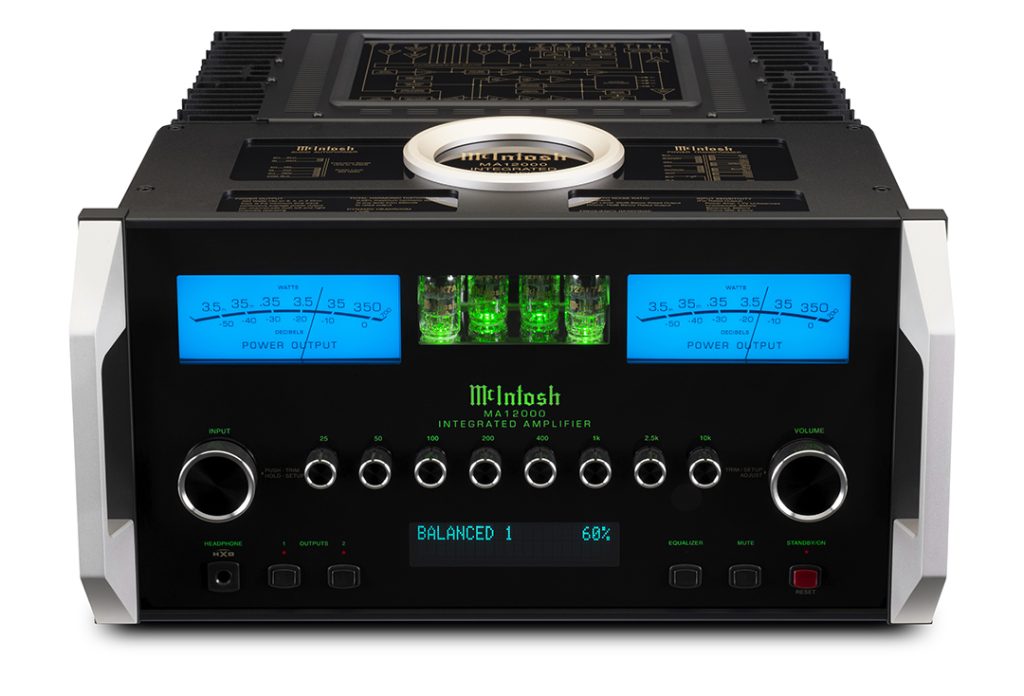
If the brief is a traditional dedicated listening room where the equipment is meant to be seen — a rack, classic separates, big statement boxes — we may still point you towards brands such as Naim, Innuos or McIntosh, and we have those in the shop too. Lyngdorf isn’t here to replace what we already do well; it’s here to do something we couldn’t do nearly as well before.
What’s available
The full Lyngdorf range is now live on the shop. Prices on individual product pages are shown as guide RRPs and will be confirmed at quotation stage.
For Lyngdorf installation in Bath, Bristol, the Cotswolds and the Home Counties, we can design, supply, install and calibrate the system around the room you actually live in — including the RoomPerfect setup, which we strongly recommend doing on-site rather than leaving for the homeowner to figure out from a manual.