A properly designed and installed dedicated home cinema in the UK typically costs between £20,000 and £120,000 including VAT, with most serious dedicated rooms landing in the £80,000–£120,000 range and no-compromise reference cinemas starting from around £200,000. Those figures cover everything: equipment, acoustic treatment, lighting, interior finish, joinery and installation labour.
That’s the honest short answer. The rest of this guide explains where the money actually goes — and you can build your own estimate, tier by tier, with our interactive cinema cost calculator. It uses the same pricing as this article and updates a live total as you choose.
We design and install home cinemas for a living, in Bath and across the South-West, and we’ve been doing it for over two decades. The numbers below aren’t pulled from a manufacturer’s brochure — they’re the ranges we see on real jobs, and they’re the same ranges built into the calculator.
The three tiers, at a glance
| Tier | Typical all-in cost (inc VAT) | What you get |
|---|---|---|
| Entry cinema room | £20,000 – £40,000 | A genuine dedicated cinema: 4K projector and fixed screen (or a large OLED TV), proper surround sound with in-wall speakers, targeted acoustic treatment, dimmable lighting and a tidy equipment rack. |
| Serious dedicated cinema | £80,000 – £120,000 | Laser projection with a calibrated screen, full Dolby Atmos speaker layout, a fully treated room, designed lighting scenes, bespoke cabinetry and a designer-level finish. |
| Reference cinema | £200,000 – £400,000+ | Flagship laser projection on a hand-finished screen, cinema-grade processing and amplification, reference in-wall speaker arrays, a room built within a room for total isolation, starfield ceiling, bar, and full bespoke joinery. |
Every figure on this page includes VAT and installation labour. If you’re comparing us with a quote that doesn’t say “including VAT”, ask — it’s the oldest trick in the book.
One thing these tiers have in common: they’re all real cinemas. A soundbar under a telly is lovely, but it isn’t what this article is about.
What actually drives the cost
Eight things decide where your project lands. They’re the same eight categories you’ll find in the calculator.
1. The picture: projector, TV or LED wall
This is usually the single biggest swing. A good 4K projector with a 110-inch fixed screen starts at around £4,500–£6,500 installed — brands like JVC and Epson do superb work at this level. Step up to laser projection with a professionally calibrated screen and you’re at £12,000–£18,000. Flagship projectors from Sony and JVC, paired with a hand-finished Stewart screen with motorised masking, run £35,000–£55,000. And at the very top, commercial-grade laser projection — the same technology as a real cinema — sits at £80,000–£150,000.
Prefer a TV? A 77-inch OLED installed is £3,500–£6,000; the very large 85–98-inch panels are £8,000–£18,000; and reference-scale screens up to 110 inches reach £25,000–£60,000. Modular LED walls — the no-compromise daylight-viewable option — start around £80,000 and can exceed £350,000 at reference sizes.
2. Speaker layout
A cinema’s sound format is written as numbers: 5.1 means five speakers and one subwoofer; 7.2.4 means seven speakers around you, two subwoofers, and four in the ceiling for Dolby Atmos — the format where sound moves above you as well as around you. More channels means more speakers, more amplification and more installation, so the layout you choose ripples through everything below. A 5.1.2 room is a fine starting point; a full Atmos reference room runs to 9.2.6.
3. Processing and amplification
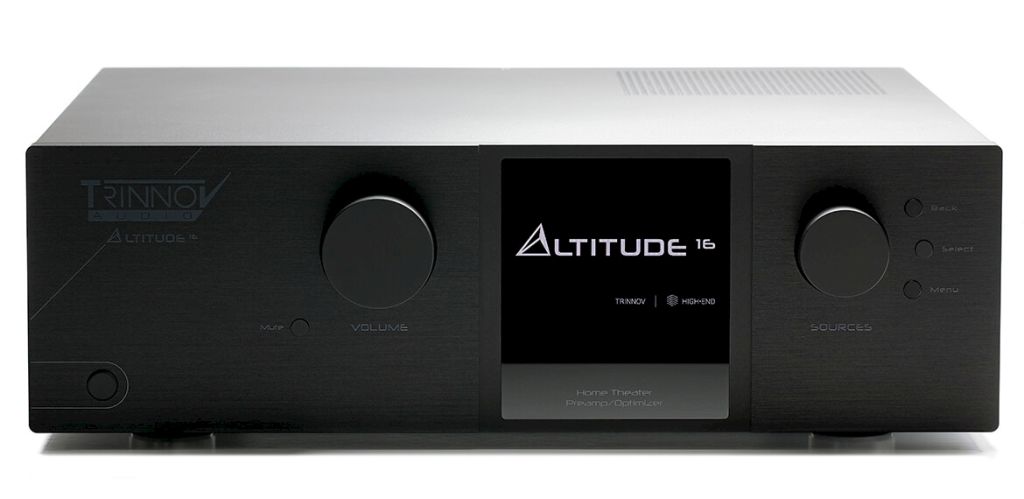
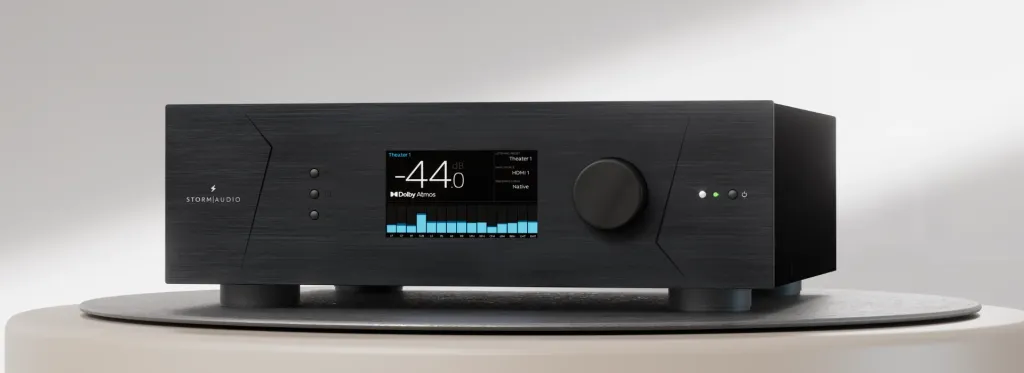
The electronics that decode the film soundtrack and power the speakers. A very capable receiver from Anthem covers an entry room at £2,500–£3,500, or £4,500–£5,500 for the larger model that handles full Atmos layouts. Serious rooms step up to dedicated cinema processors from Storm Audio: £18,000–£22,000 for their all-in-one unit, £35,000–£65,000 for a separate processor with matched power amplifiers, and £80,000–£180,000 where the amplification comes from audiophile marques like Gryphon or McIntosh.
4. Speakers
In a dedicated cinema we almost always specify in-wall speakers — they disappear into the room and image beautifully behind an acoustically transparent screen. Italian-made Sonus faber in-wall systems run £6,000–£12,000 at entry level and £14,000–£24,000 at the top of their range. Above that sit true line-source and planar-magnetic in-wall systems — genuine mastering-studio reference equipment, and our pick for serious cinemas. At this level — including Wisdom Audio — pricing is strictly on application: we’ll quote it for your room. At the very top end we also design around Steinway Lyngdorf custom systems.
5. Acoustics
The least glamorous line on the budget and the one that most decides how the room actually sounds. Basic treatment — targeted at the places the room needs it most — costs £1,800–£3,000 and is the sensible starting point. A treated room with an acoustically transparent drop ceiling is £4,500–£7,500; a fully treated room (walls, ceiling, floating floor) is £9,000–£16,000; and a reference build — a decoupled room-within-a-room so the cinema can’t be heard next door — is £22,000–£45,000. We cover this in more depth on our room acoustics page.
6. Lighting
A cinema needs controllable light: dim for the film, brighter for finding your seat, something in between for half-watching with friends. A single smart-dimmed circuit with a couple of programmed scenes starts at £1,200–£2,000. Cove lighting and sconces with multi-scene Lutron control runs £5,000–£8,500; tunable, professionally programmed lighting is £12,000–£20,000; and the full theatrical treatment — fibre-optic starfield ceiling included — is £24,000–£38,000. More on how we approach this on our lighting design and control page.
7. Interior design
The soft side of the room — and a part of the job we do entirely in-house, so the interior grows out of the acoustic design rather than fighting it. The few necessaries that make a room feel right and perform properly start at £1,500–£3,000. A fuller scheme, designed to suit the room, is £5,000–£9,000; a complete designed fit-out with bespoke fabrics and finishes throughout is £15,000–£30,000; and our full end-to-end interior design service — everything bespoke, down to the last detail — runs £40,000–£90,000.
8. Joinery
From a simple concealed equipment rack (£900–£1,800) through a built-in AV cabinet (£3,500–£6,500), to a bar behind the seating with concealed equipment (£9,000–£18,000), up to a fully joiner-built room with seating riser and doors (£22,000–£55,000).
And the labour
Design, installation, cabling, calibration and programming typically add 18–22% on top of the equipment and build cost. It’s built into every total in this article and into the calculator. The exact figure depends on access, the building (listed properties keep us on our toes in Bath), and how clever the room shape is.
Three realistic example builds
These are the kind of rooms we actually deliver — each one assembled from the tiers above, with labour included. Build your own version in the calculator.
The entry cinema — around £22,000–£39,000. A 4K projector with a 110-inch fixed screen, a 5.1.2 Atmos layout on an Anthem receiver, Sonus faber in-wall speakers, targeted acoustic treatment, a smart-dimmed lighting circuit with programmed scenes, the interior essentials done properly, and a neat equipment rack. A genuinely cinematic room in a sensible spare room or garage conversion — and a world away from a TV and soundbar.
The serious cinema — around £80,000–£120,000. Laser projection with a calibrated screen, a 7.2.4 Atmos layout, Anthem’s flagship receiver, top-of-range Sonus faber in-walls, a fully treated room, cove lighting with programmed scenes, a designed interior from our in-house team, and bespoke AV cabinetry. This is the heart of what we build, and where the price-per-pound-of-goosebumps is best.
The reference cinema — £200,000–£400,000. Flagship Sony or JVC laser projection on a Stewart screen with motorised masking, a 9.2.6 full-Atmos layout, Storm Audio processing with matched power amplification, reference in-wall line arrays (priced on application), an isolated room-within-a-room build, tunable scene lighting, a fully designed interior and full bespoke joinery including a bar. Nothing about the experience asks you to forgive it.
Throughout, control matters: one remote, one interface, lights and film and volume in one place. We build that on URC Total Control across our projects — it’s part of the design and programming labour rather than a separate line you need to budget for at this stage. You can see rooms like these in our project gallery.
How we design and build a home cinema
Knowing what a cinema costs is one half of the question. The other half is what you’re actually paying for. We film many of our builds on our YouTube channel — a reference cinema in Wales ran to a seven-part series, from bare room to final calibration, and a garden-room cinema build is documented from first design onwards — so none of what follows is a brochure process. You can watch it happen.
1. Consultation — and a proper listen. Every project starts with a conversation about the room, the budget and how you’ll actually use it. Then we get you in front of a real system: our demo room in Bath was designed and built with exactly the same methods we use on client rooms. When we modelled it, the room’s own dimensions produced a stubborn bass problem at 40Hz — so we engineered the treatment to fix it, down to bass traps roughly 80cm deep in the corners. Thirty seconds in a room like that explains more than any spec sheet.
2. Acoustic modelling before anything else. This is where every design now starts: we plug the room’s dimensions into acoustic modelling software and find the problems before a single panel goes on a wall. A typical room shows large peaks and dips in the bass — in one recent build, the trouble sat between 35Hz and 70Hz — and the model tells us exactly how deep each absorber, ceiling void and bass trap needs to be to fix it. Nothing is guessed: on one garden-room cinema we dropped the ceiling by precisely 58mm because that’s what the maths asked for.
3. Design and engineering. With the acoustics solved on paper, the rest of the design is built around it: lighting scenes for film, sport and entertaining; interiors — fabrics, paint, flooring, seating — designed by our own team so they work with the treatment rather than hiding it; and joinery drawn around the equipment, not the other way round. The stretch-fabric wall system we use in all our cinema rooms is what lets a fully treated room look like a beautifully upholstered one.
4. The build — our own hands. We don’t hand the drawings to someone else. Framing, first fix, acoustic construction, fabric walls and the finishing joinery — including CNC-cut equipment racks in high-density Valchromat — are done by us. It’s slower than subcontracting everything, and it’s why the rooms come out the way they do.
5. Calibration — measured, not guessed. When the room is built, we measure it again with a calibrated microphone and prove the design worked: bass decay times, frequency response, the lot. On our recent Wales reference room the finished measurements show a response within a few decibels across the band and bass that stops when the soundtrack does — and we showed the graphs on camera. An uncalibrated cinema shows you a picture and plays you a noise; a calibrated one shows you the film.
6. Handover and aftercare. Before we leave, everyone in the house is signed into the apps, the lighting scenes are named and programmed, and the whole room drives from one interface. We hand over slowly, over days rather than minutes, so the cinema gets used — and we stay on the end of the phone afterwards.
What makes us different
- Measurement first. The room is modelled and the problems found before anything is bought or built — and the finished room is measured to prove it worked.
- Genuinely in-house. Acoustic design, interior design, lighting design, joinery and the build itself are done by us, not parcelled out.
- We show our working. Multi-part build series and real measurement results, published openly on our channel. Few installers let you watch this closely.
- One interface. Every room runs on URC Total Control — we were awarded Gold at URC’s Unsurpassed Dealer Awards.
- Recognised work. Our installations have been named Best International Installation at URC’s Unsurpassed Dealer Awards four times — Gold once, Silver three times, most recently Silver in 2026.
What’s not worth cutting
Twenty-plus years of installs have taught us where corner-cutting comes back to bite:
- Acoustics. The most common false economy. A £50,000 equipment list in an untreated room will be beaten — comfortably — by £30,000 of equipment in a treated one. If the budget pinches, drop a projector tier before you drop the acoustic treatment.
- The screen. People agonise over the projector and then bolt it to a cheap screen. The screen is half the picture. Literally.
- Calibration and programming. An uncalibrated projector shows you a picture; a calibrated one shows you the film. And a cinema the family can’t drive from one remote is a cinema that doesn’t get used.
- Blackout and light control. Stray light flattens even a flagship projector. Proper blackout costs little and pays back every single evening.
- Cabling and the rack. Nobody photographs it, but it decides whether the system is reliable for fifteen years or a recurring annoyance.
What can you trim? Joinery and interior extras can always be phased in later. Seating can be upgraded down the line. The bar can wait. Get the room, the acoustics and the core system right first — those are miserable to redo.
Frequently asked questions
Can I get a home cinema for under £10,000?
Not a dedicated cinema room done properly — by the time you’ve covered a real surround system, treatment, lighting and installation, you’re at £20,000 or so. What under £10,000 buys very well is a media room upgrade: a large TV and quality surround sound in a living space. That’s a different thing, and for plenty of rooms and households it’s the right thing. We’ll tell you honestly which suits yours.
Projector or TV — which is better?
For a dedicated, light-controlled cinema room, a projector gives you the scale that makes cinema feel like cinema, at a far lower cost per inch. For a multi-use room with daylight, a large OLED is brighter, simpler and superb. Above roughly 100 inches in a bright room, modular LED walls beat both — at a price.
Do I really need acoustic treatment?
Yes — it’s the difference between a room full of expensive equipment and a cinema. Even the basic tier (targeted treatment where the room needs it most, £1,800–£3,000) makes a clear, audible difference to how dialogue and bass behave. It’s the best-value line on the whole budget.
How long does a home cinema installation take?
Most dedicated cinema rooms take a few weeks on site once the design is agreed; structural room-within-a-room builds run longer. Building work, access and lead times on specialist equipment set the pace more than the installation itself — we’ll give you an honest programme for your room at the design stage.
Does a home cinema add value to my house?
A well-executed dedicated cinema is a genuine differentiator at the upper end of the Bath, Bristol and Cotswolds market — buyers remember it. But build it because you’ll use it. The honest return on a home cinema is measured in evenings, not estate-agent percentages.
Why is this a guide and not a quote?
Because rooms differ. Access, parking, listed-building constraints, room shape and what’s behind your plasterboard all move the number. The ranges here (and in the calculator) are honest brackets from real projects — the exact figure needs a conversation and usually a site visit.
Price your own cinema — then come and hear one
Two next steps, in whichever order suits:
- Use the cinema cost calculator — pick a tier in each category and watch the total build. It takes two minutes and you can send yourself the result.
- Visit our demo room in Bath. Numbers on a page can’t do what a properly treated room with reference equipment does in the first thirty seconds. Bring a film you know. Get in touch to book a visit, or read more about how we approach home cinema design and installation.
Wherever you are in the South West or South Wales, we design and install home cinemas in person — explore our local pages for Bath, Bristol, Cardiff, Swansea & the Gower, Newport & Monmouthshire and the Vale of Glamorgan.