The Grimm Audio MU2 is a Roon server, streamer, DAC and analogue preamp in one small box, and after about a year of getting to know it my summary is two words: compact and epic. It has a tonal colour and three-dimensionality that made a very good Innuos and Mola Mola pairing sound thin, and if you use everything it does, the value is hard to argue with. A more expensive separate streamer and DAC still beats it for air and high-frequency detail, and it gives more with a separate Roon server.
This Grimm MU2 review began as the video above, published in February 2025. I made it with Jess, our senior engineer, who I’d tortured for hours and hours with “listen to this, listen to that” so that she could get to know the MU2 in a much shorter space of time than the year or so I’d spent with it. What follows is that review in written form, with some notes from living with the MU2 since.
One thing to be clear about before the comparisons. The MU2 is a streamer and a DAC. The Innuos ZEN NG I compare it with is, in this instance, just a streamer: without a DAC there is no sound, and the DAC is a good chunk of the sound as well. So the comparison is based on the fact that the ZEN NG is with the Mola Mola Tambaqui.
What the Grimm MU2 is
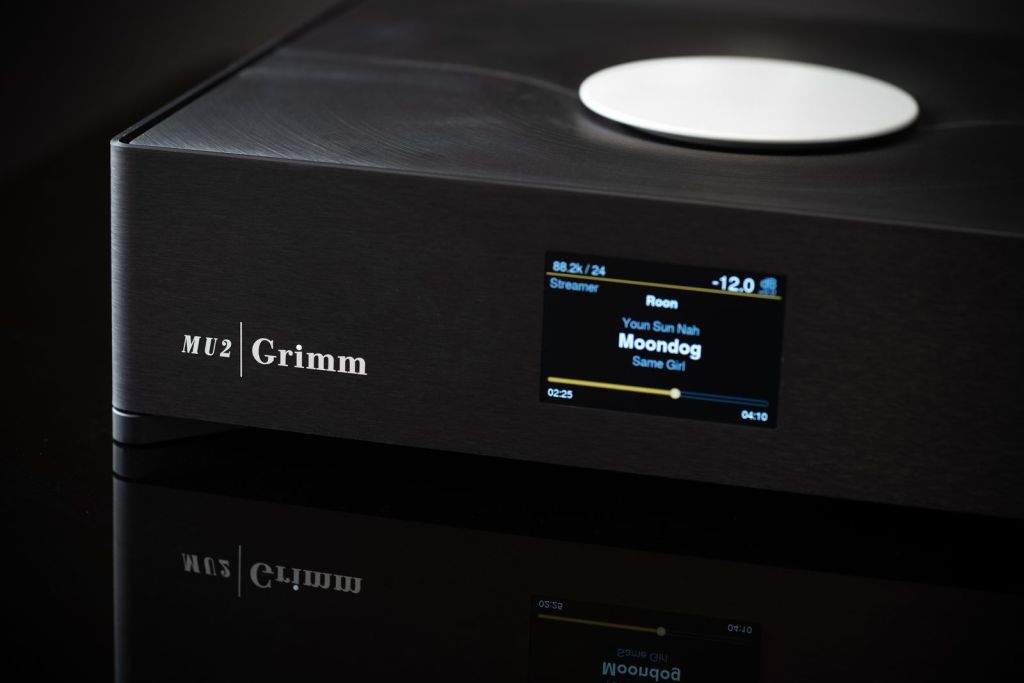
The MU2 is an awful lot more than I give it credit for most of the time, because I constantly use it just as a streamer into an integrated amp. It’s a Roon server, a Roon endpoint, a streamer, a DAC and a preamp, with an analogue throughput and an amazing relay-based volume control. As with the Gryphon Diablo 333, there’s very little in the signal path where the volume control is concerned. And it all fits in this tiny little box.
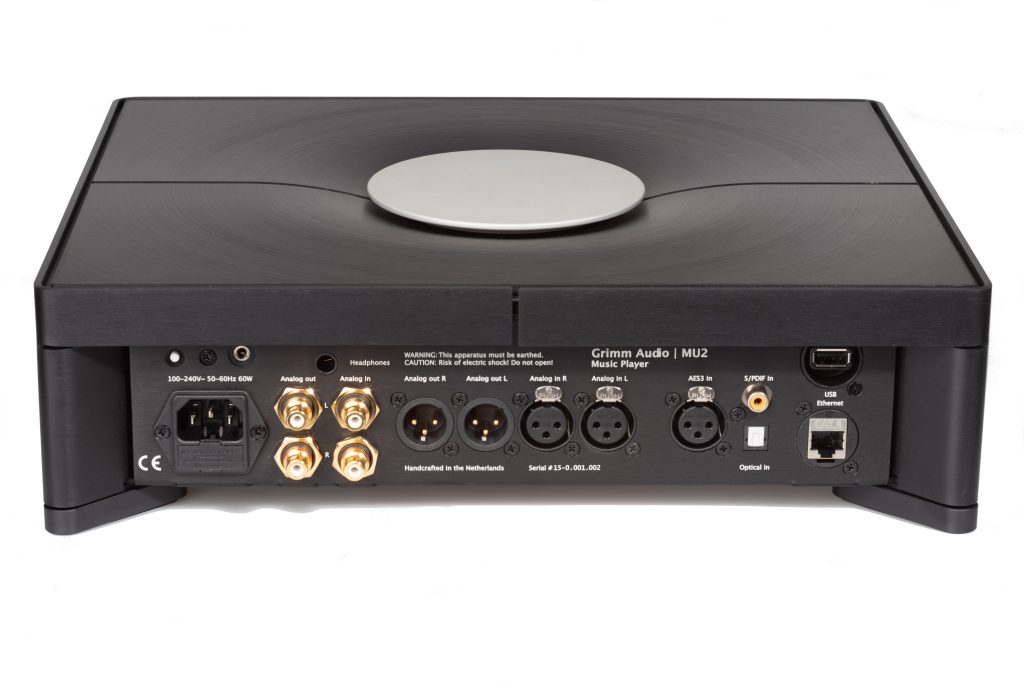
The analogue throughput matters if you play records, because your turntable doesn’t get digitised at any stage. Grimm’s manual confirms that the two analogue inputs, one XLR and one RCA, stay in the analogue domain. They’re line-level inputs, so a turntable needs a phono stage first. There are three digital inputs too (AES/EBU, coaxial and optical), which is where your TV goes, set to stereo, because surround formats aren’t supported. Outputs are XLR, RCA and a headphone socket, and music can live on an optional internal SSD, a USB drive or a NAS.
In its simplest form you could add a pair of something like active ATCs, or active anything, and need nothing else for the hi-fi system. At the time of writing the Grimm Audio MU2 starts at £17,250 on our shop.
The people behind it
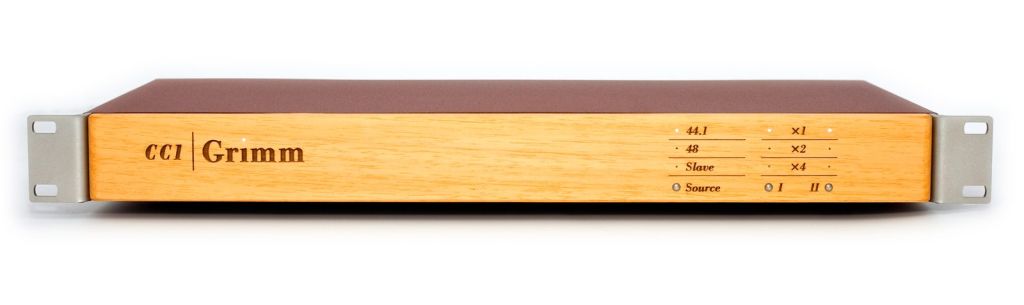
Grimm Audio are a Dutch company with a studio heritage. They have a deep understanding of the benefits of clocking and jitter, and one of their most famous products is the CC1, the master clock that goes into studios as the clock for the entire studio.
As a cherry on top, they’re absolutely lovely people. I met Eelco Grimm at the Munich show and he gave me so much more time than he needed to in such a busy environment. He then emailed me in the evenings about things that had nothing to do with Grimm products and were of no benefit to him whatsoever, purely to help me with cinema acoustic design. Since then he has given us more than a normal amount of his time, providing information on integrating the MU2 into a control system.
What I compared it with
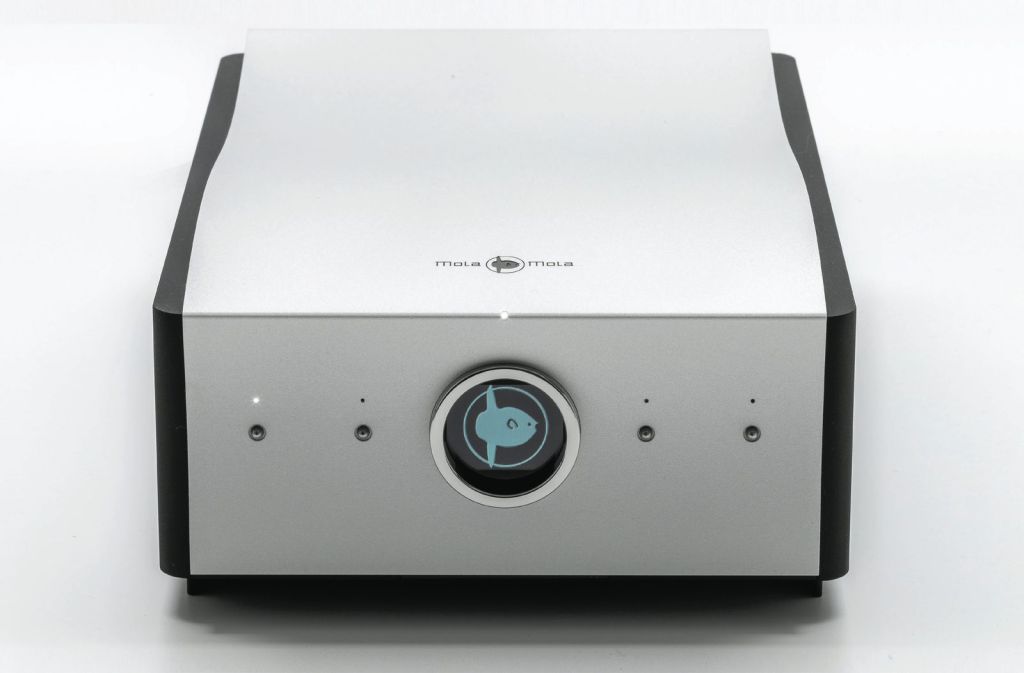
I’ve compared the MU2 with three front ends: the Innuos ZENith Mk3 with the Mola Mola Tambaqui DAC, the ZENith Mk3 with McIntosh’s DA2 digital module, and, the one I’ll mostly talk about, the Innuos ZEN NG with its PhoenixUSB upgrade card into the Tambaqui. Comparing is easy. With two of them on two inputs of the amplifier you can group them in Roon, have both playing simultaneously, and choose between them at the touch of a button. We’ve had the MU2 on both the Gryphon and the McIntosh amplifiers.
Setting up and living with it
I’ve found it incredibly simple and incredibly reliable. The menus are easy to navigate once you get used to the big old dial on the top and pressing it in, and the web interface, which is primarily how I’ve interacted with it, has everything you need and nothing you don’t.
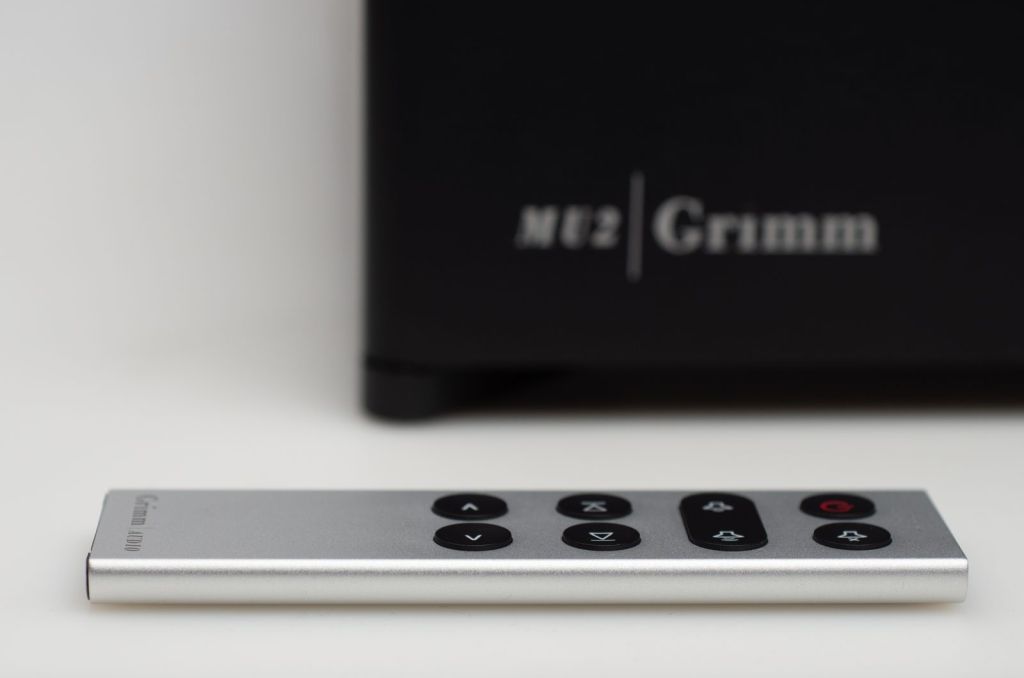
One of its cleverest features is that it will learn an infrared remote for most of its functions: skipping tracks, volume, pause, play, changing input. In the web interface you select the function, press a button on any remote, and that button is assigned to it. The infrared receiver is on a tail, too, so the MU2 can go in a box or behind a door with just the little teardrop receiver in view. Mine sits out of sight under the front edge of the player, and it’s so sensitive that I’ve never had a problem. Two notes from Grimm’s side: the manual asks you not to shut the MU2 in an unventilated cabinet, and since September 2025 every new MU2 has come with Grimm’s own remote.
When we filmed, streaming on the MU2 was Roon only. We love Roon, so I had no problem with that, and Grimm don’t stand still on their products: they were already working on UPnP, so that you could use whatever streaming app you like. That arrived in November 2025, in a firmware update that added a UPnP renderer and Tidal Connect. Roon itself is a separate paid subscription.
More than a year on from the video, it has been fit and forget. It’s visually interesting when you do look at it, but small enough not to draw attention to itself, and you never really have to touch it. I use it through Roon mainly, or Tidal Connect, and it never goes wrong, so I never really need to go back into the web interface. Rock solid.
How it sounds
Next to the ZENith Mk3 and Tambaqui, the MU2 makes instruments much more dense and tangible. It’s not wishy-washy watercolour. It’s solid and three-dimensional, and it feels as though you could move your head and look round the instruments and the vocalists as they hang in space. There’s great presence and clarity, but it’s done in a really natural way.
I once described it, to somebody who was really interested before it launched, as what you’d get if analogue had a digital baby. It has the tonal colour you associate with tape. I have a rose-tinted memory of an old cassette deck I used to have, and there’s an analogue quality to the MU2 that comes across in tape quite a bit.
Jess made the point that Grimm have always strived to reproduce the original recording as authentically as possible, and that does come through. That kind of claim can carry a negative connotation: when people say “truth teller” they often mean it holds no prisoners and shows you everything, warts and all. I don’t think the MU2 is guilty of that. It does it in a beautiful, very liveable way. Bright without being harsh, as Jess put it, with a lower end that’s controlled, not overpowering, but with a lot of tone to it.
It gets rid of your hi-fi-itis a little. It stops you listening to what the hi-fi is doing and gets you listening to what the music is doing. The things I keep coming back to are the wood of a cello, the wood of a drum, the body in vocals, the grunge of an amplifier, the husk of a voice, the thick strings against the thin strings on an acoustic guitar. The MU2 is so rich in that kind of tonal colour.
How it compares
Against the Innuos ZENith Mk3 and Mola Mola Tambaqui
It was simply better. The ZENith Mk3 and Tambaqui sounded bright, a bit splashy and a bit brittle in comparison, and lacked that mid-range tonal colour. The MU2 made the combination sound thin. Jess told me I was being a little harsh. I am being harsh, but it’s the reality of it, and it was a wow moment for both of us. I never chose the Tambaqui with the ZENith Mk3. Good as it is, the MU2 is leagues ahead, and it was such a relief to just have beautiful music playing, regardless of what I put on.
Against the Innuos ZEN NG and Mola Mola Tambaqui
This pairing costs a few thousand pounds more than the MU2. At the time of writing the ZEN NG starts at £10,300 on our shop and the Tambaqui is £9,999, before the PhoenixUSB board at £1,300. It also does less. You can use the Tambaqui as a digital-only preamp, but it has no analogue throughput, and its volume control, really good as it is, isn’t relay based like the MU2’s.
But this is the big but. With both on two inputs of an amplifier, I was rarely choosing the MU2 over that combination, I have to be honest. The ZEN NG and Tambaqui had more air, detail and grip, and I have to confess that in my system I prefer them, for the greater detail in the high frequencies. The MU2 might still have more tonal colour.
The PhoenixUSB output is what makes the difference. With the ZEN NG’s standard USB output, the one it has out of the box, the MU2 was better again. Low jitter is something the MU2 is so good at, and it’s only against a second very, very low-jitter setup that it loses out.
As a preamp
When we ran the MU2 into the McIntosh amplifier, bypassing its own preamp, it clearly showed it could do three-dimensionality, layers and that hanging in free space consistently, without things disappearing when they weren’t the centre of focus. It’s a bit like the Gryphon in that respect, where lots of things hang tangibly in space simultaneously. The soundstage was just incredible.
Getting more from it with a separate Roon server
If you have a very transparent system and you’re trying to extract the absolute most from the MU2 as a streamer, a dedicated, high-quality offboard Roon Core, meaning a separate Roon server, has its benefits. I was showing a visitor from Meridian our reference system, playing All You Children by Jamie xx, which has a wobbly texture on top of the bassline. With the offboard Roon Core the texture was there. With the MU2 as its own Roon Core, that detail in the extra layers of bass simply wasn’t there. It was night and day, a definite on-off thing.
A lot of reviews say they don’t notice a difference. I wonder whether they’re using a not-great server, a PC or a Mac, rather than a dedicated one. Look at the Innuos range purely as servers and you get huge improvements in sound as you go up it, so there’s clearly a benefit in principle. A ZENith Mk3 is a chunk of money, but it noticeably upgrades the MU2. Jess’s fair point is that not everybody has that option.
So if you have £20,000 to spend, buy this and an offboard Roon Core. Upgrades in that kind of budget are hard to find: when you’ve spent £20,000 on a streamer, you can’t usually upgrade it for £4,000, because you have to replace it with one at £30,000.
For context, Grimm’s own guidance is that the built-in Roon server suits libraries of up to 100,000 tracks, with an external server for anything bigger. The November 2025 firmware also made the MU2 an official Roon Ready endpoint, which Grimm say integrates perfectly with an external Roon server. My listening was done before that update.
The DAC, and what I haven’t tested
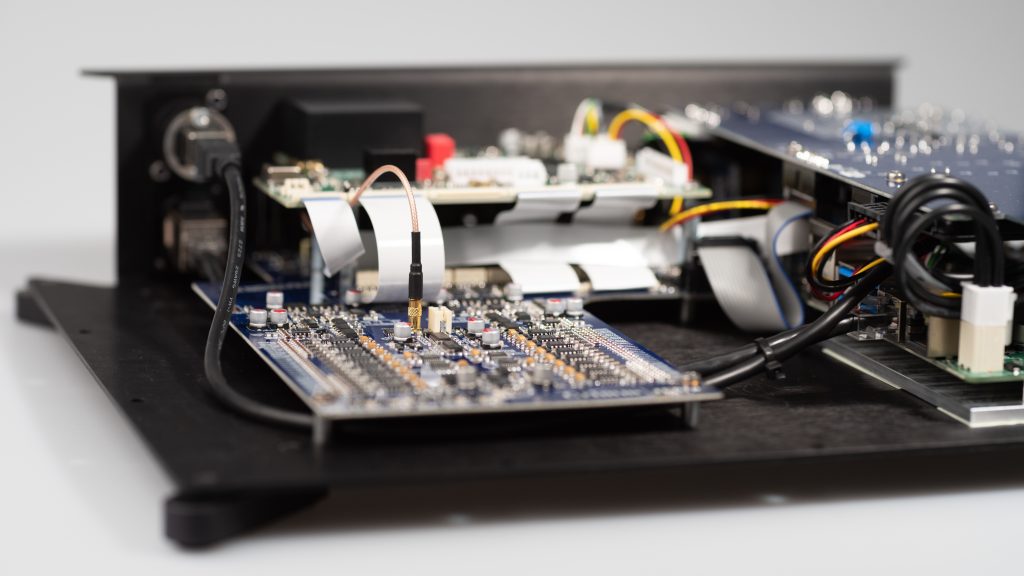
Grimm use their own in-house DAC technology. They’re not buying DAC chips off the shelf and implementing them really well. They use an FPGA, a programmable bit of silicon, so they can write their own digital-to-analogue conversion and run it in there. Grimm call it the Major DAC, and I do believe it’s one of the MU2’s special elements. When you have a transparent enough system, or one that would benefit from the tonal signature of that DAC, it’s definitely the right tool for the job.
What I haven’t done yet is isolate the DAC, by putting something like a CD transport into the Mola Mola and then into the MU2. If you wire your TV in, do you still get the Grimm sound? Reviewers who have been in the game a long time, and seem to have pretty decent ears, fairly consistently say that what they hear from it as a streamer carries over to its digital inputs.
Neither the MU2 nor the Tambaqui uses an off-the-shelf chip. One is Bruno Putzeys’ work and the other is Grimm’s own, and Bruno was himself a co-founder of Grimm Audio. That takes nothing away from Eelco and Guido, the two guys that are Grimm, but having had Bruno in their midst at some point can’t have been a downside.
Jess’s view
A few days before we filmed, I asked Jess to pick a couple of songs that actually meant something to her and to compare the MU2 with the ZEN NG and Mola Mola from an emotional perspective rather than a hi-fi one, to balance my view. She finds it hard to call a preference, because both are really, really good. She had a wow moment when the MU2 first went in, rehearing tracks in a different way, and exactly the same again when the ZEN NG arrived. The ZEN NG with the PhoenixUSB is an emotive experience, but she feels a joy every time we go back to the MU2 and its signature sound. She sometimes finds herself going back to the Innuos input more, but it’s a fine line, and on budget she would recommend the MU2 every day.
Quirks and criticisms
- In my system the ZEN NG with PhoenixUSB and the Tambaqui has more air and greater detail in the high frequencies.
- On a very transparent system it gives more with a separate Roon server doing that job, which is more money on top.
- You do have to get used to driving the menus from the one big dial on the top.
Asked for its quirks more than a year later, my honest answer was that I think it’s basically a perfect product.
Who it’s for, and who it isn’t
If you’re a music-first audiophile, the MU2 rids you of that upgrade-itis thing: you don’t need more. And if your system needs some tonal colour, this might be one of the best options out there, full stop. Compared with the airier ZEN NG and Mola Mola, it shifts the emphasis down the frequency range. Something like the Marten Parker Duo Diamond Edition, which we had in for test, can benefit from a bit more tonal colour in the lower mid-range and upper bass. We hadn’t fully tested that pairing when we filmed, so it’s something to try, not something I’ve confirmed.
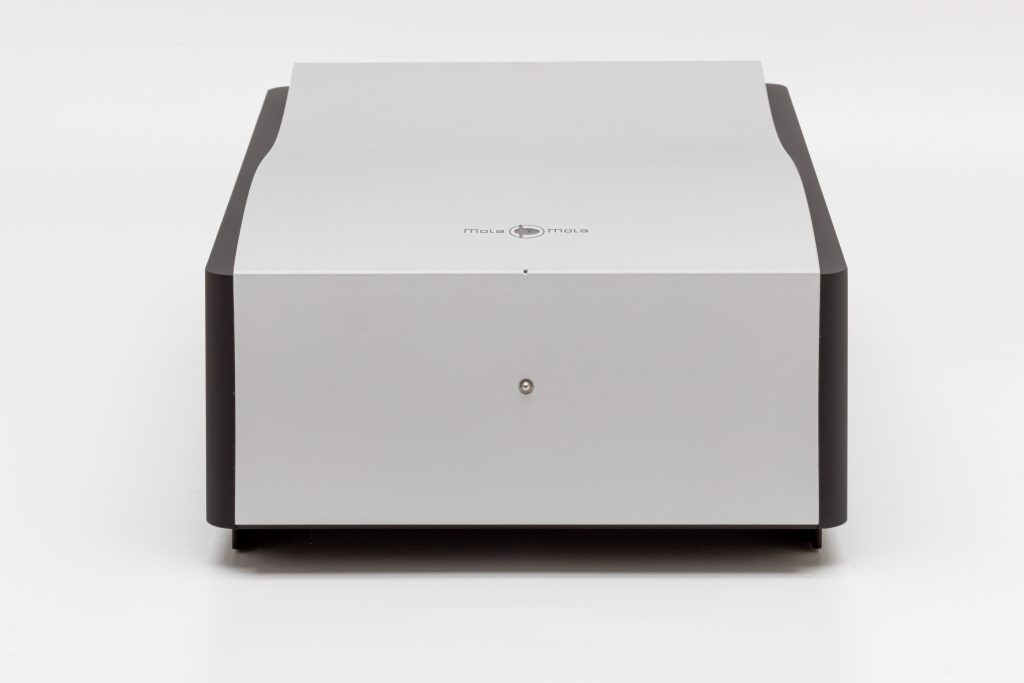
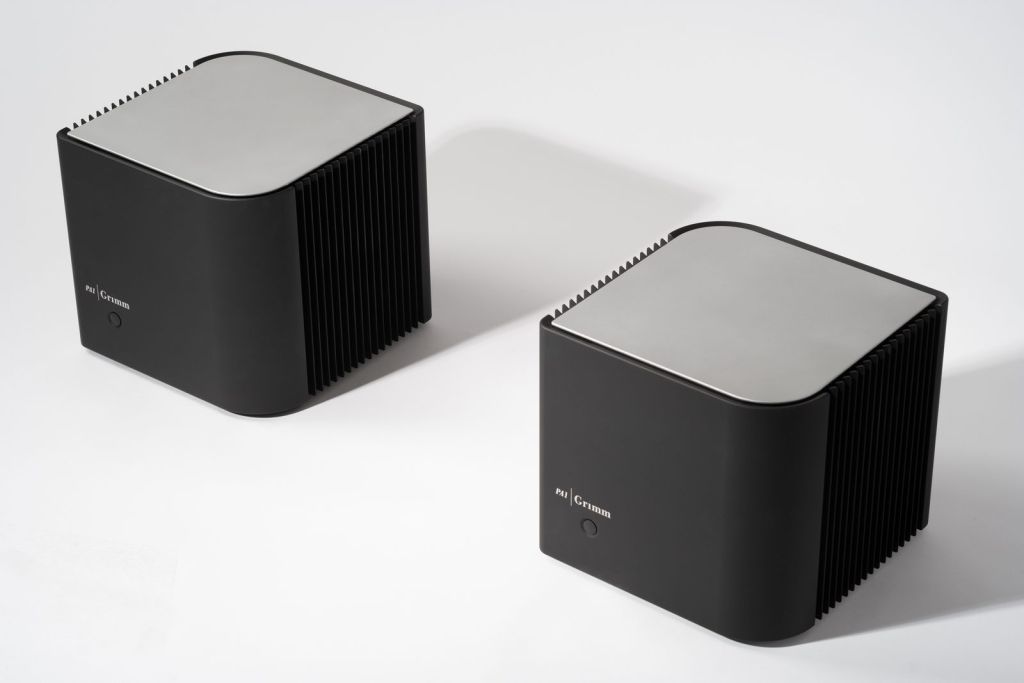
It also makes a lifestyle system with hi-fi performance, zero compromise, which I think is astonishing. Add a tiny stereo power amp like the Mola Mola Perca, tucked away or sat next to it, and a pair of whatever speakers suit you. Jess wouldn’t hide the MU2 itself, because she thinks it’s one of the nicer looking products, and I’d leave it out anyway so you can get at the wheel. The Mola Mola Kaluga monoblocks are the other compact partner, and since the video Grimm have announced a power amplifier of their own, the PA1 mono block.
If you can use every element of it, the value is quite off the charts. For that money you get a preamp that probably competes with many in the £5,000 to £10,000 category, a DAC that competes in the £10,000 category, a Roon Core you’d otherwise buy as a separate box, that tonal colour and the quality of that clock, all in that form factor. It’s really hard to argue with.
So it’s for the person looking for a five-figure, not six-figure, ultimate front end: I can’t think of anything better in that category when you consider everything it does. It’s not for somebody who doesn’t want to spend five figures, and it’s not entry-level high end. This is a holy grail product, just not for somebody who wants a high box count and a six-figure solution.
Verdict
I’d love to take a more in-depth look at Grimm. I’m keen to try the MU1, which is the same form factor, with the Mola Mola, and an MU1 with a pair of Grimm’s LS1 active speakers would be a phenomenal little system.
As for the MU2, the words I’ve written down are compact and epic. The one caveat: if you want more from it still, and Roon is what you’re using it for rather than the whole gamut of its features, add an offboard Roon Core.
Frequently asked questions
What is the Grimm MU2?
The Grimm Audio MU2 is a Roon server, streamer, DAC and analogue preamp in one small box, and after about a year of getting to know it my summary is two words: compact and epic.
How much does the Grimm MU2 cost?
At the time of writing the Grimm Audio MU2 starts at £17,250 on our shop.
Can I connect a turntable or a TV to the Grimm MU2?
Grimm’s manual confirms that the two analogue inputs, one XLR and one RCA, stay in the analogue domain. They’re line-level inputs, so a turntable needs a phono stage first. There are three digital inputs too (AES/EBU, coaxial and optical), which is where your TV goes, set to stereo, because surround formats aren’t supported.
How does the Grimm MU2 compare with the Innuos ZEN NG and Mola Mola Tambaqui?
The MU2 is a streamer and a DAC. The Innuos ZEN NG I compare it with is, in this instance, just a streamer: without a DAC there is no sound, and the DAC is a good chunk of the sound as well. So the comparison is based on the fact that the ZEN NG is with the Mola Mola Tambaqui. In my system the ZEN NG with PhoenixUSB and the Tambaqui has more air and greater detail in the high frequencies.
Who is the Grimm MU2 for?
So it’s for the person looking for a five-figure, not six-figure, ultimate front end: I can’t think of anything better in that category when you consider everything it does. It’s not for somebody who doesn’t want to spend five figures, and it’s not entry-level high end.