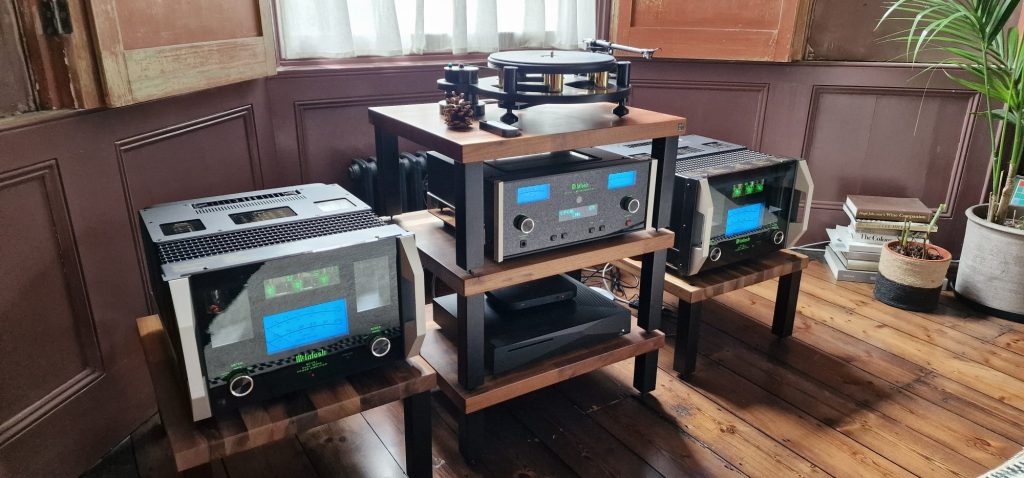
I was lent a Gryphon Diablo 333 for a couple of months, and this review sets it against the McIntosh MA12000 in my own system, an amplifier I was in love with. The Gryphon is the best integrated amplifier I’ve ever heard, and the first line of my verdict is: you can’t have it back.
What the Diablo 333 is
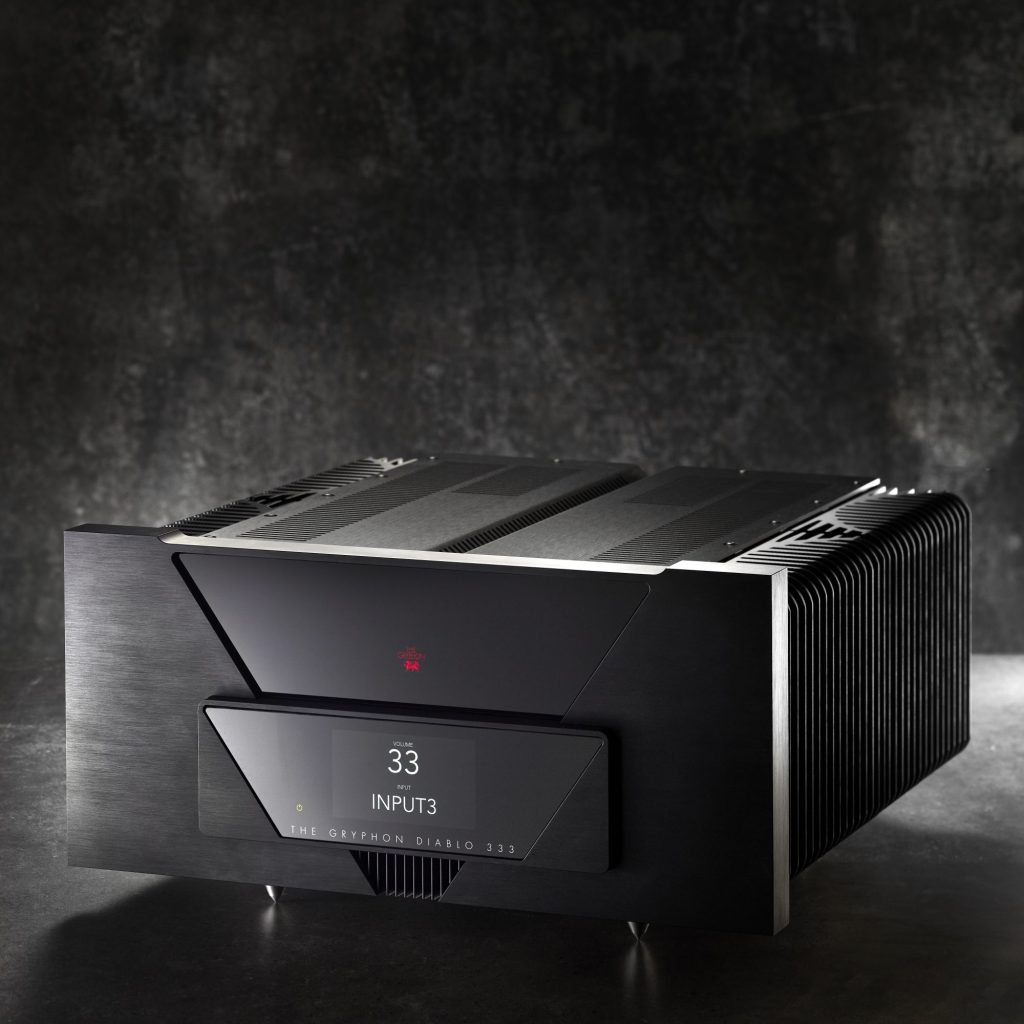
Gryphon is Danish: fact number one. The Diablo 333 is its big integrated amplifier and it replaces the Diablo 300, which is a bold move: Gryphon says the 300 sold in the thousands. The 333 contains trickle-down technology from the Commander preamplifier and Apex power amplifier at the top of the Gryphon range. The most notable part, I think, is the output stage: Gryphon says the output transistors, ten per channel, are identical to the ones in the Apex.
It’s touted as the world’s best integrated amplifier. It delivers 333 watts into 8 ohms, which is very specific, 666 watts into 4 ohms, which is very ominous, and 1,100 watts into 2 ohms. So it’s a beast. Odd examples aside, I can’t think of a speaker that is going to require more than that.
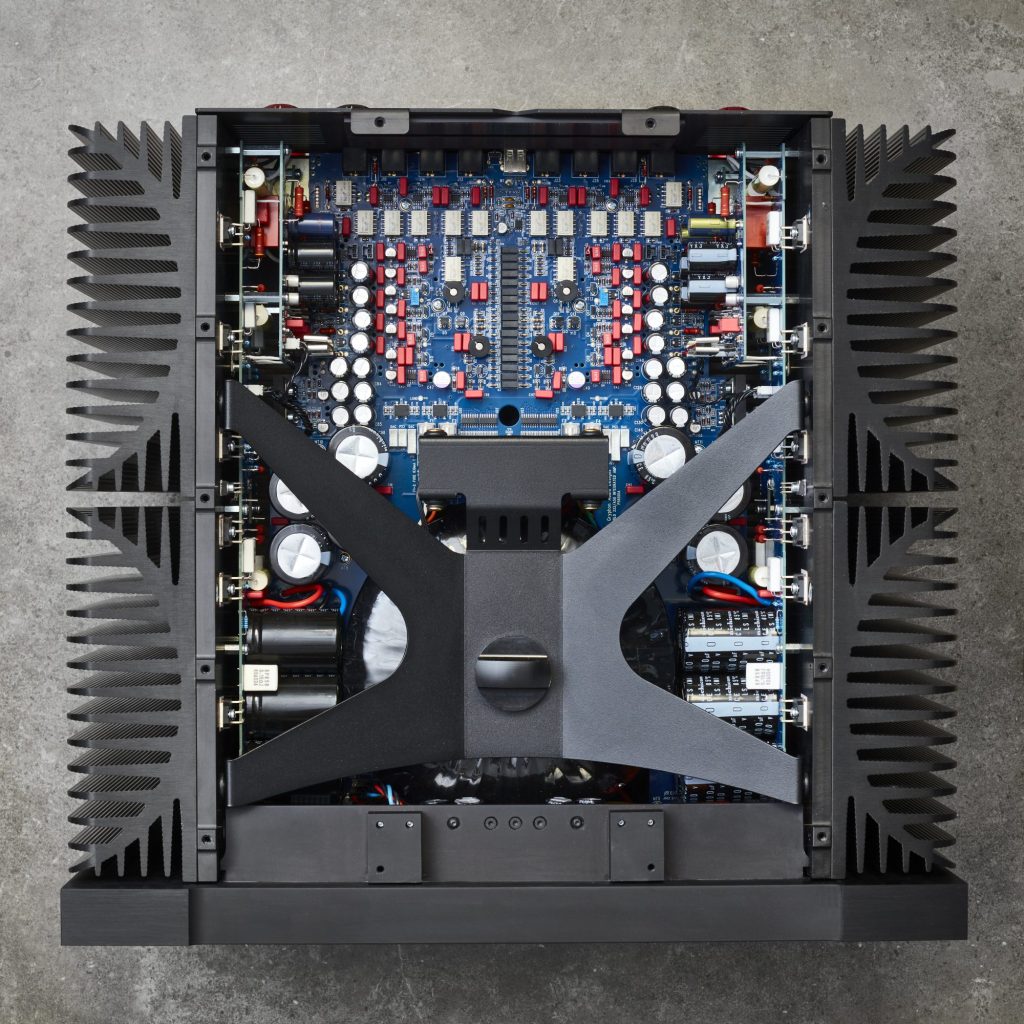
The electronics are a Tom Møller design, so it’s had the big brain on it, and the casework is by Gryphon’s founder, Flemming Rasmussen. Inside is a very special relay volume control, which I think most high-end equipment strives to implement. True to Gryphon’s short signal path philosophy, it never puts more than two resistors in the circuit.
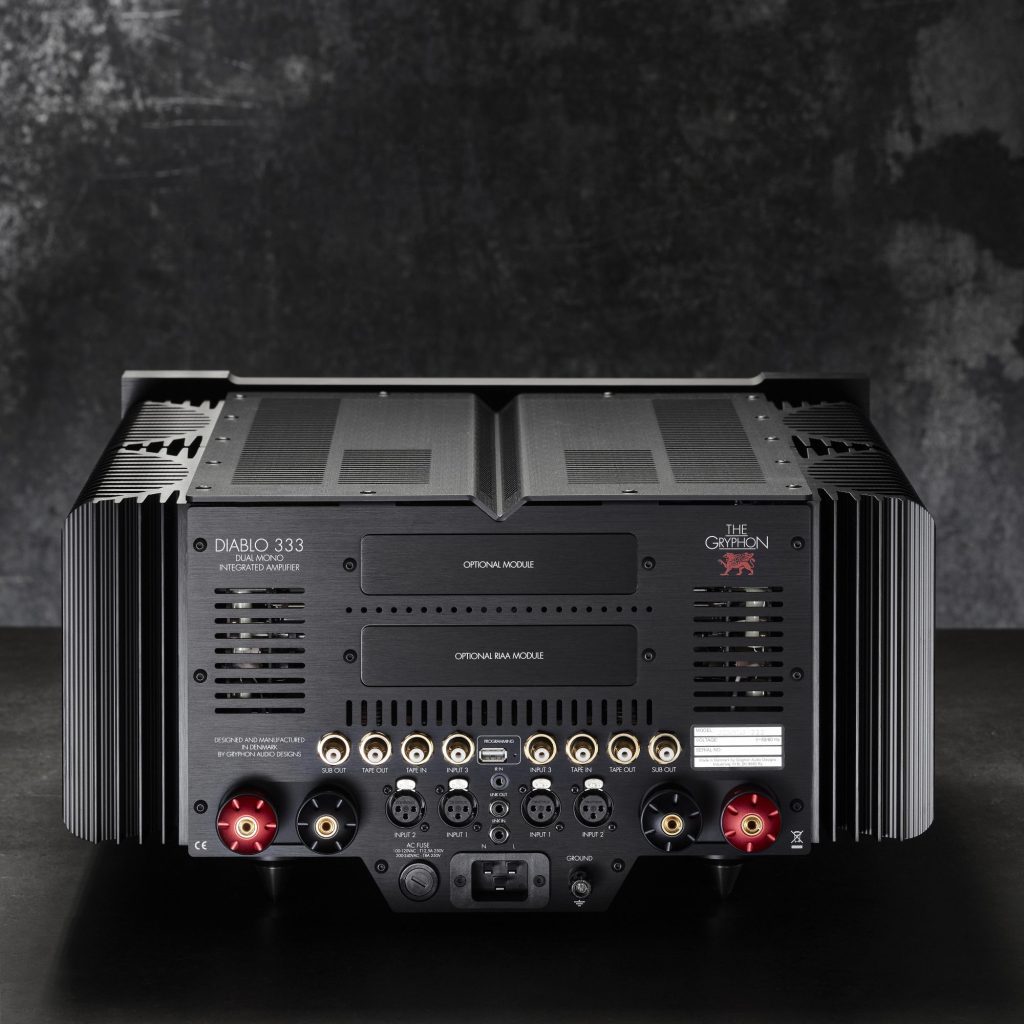
The practical details: two balanced XLR inputs, two single-ended RCA inputs, a tape loop and subwoofer outputs, with a DAC and a phono stage as optional internal modules. At the time of writing it’s £24,500 in our shop, before either module. I can’t find a bad word about it in the press.
The system I heard it in
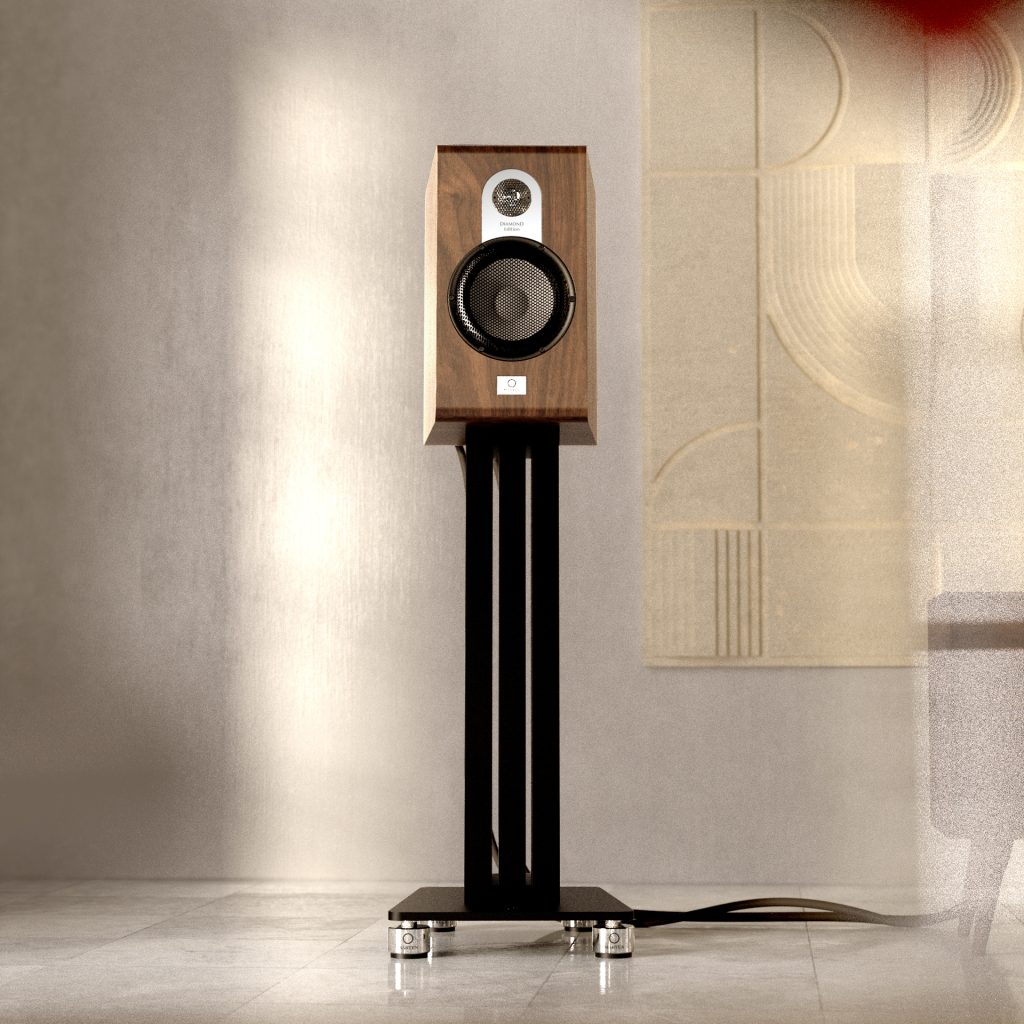
Matt, who is with me in the video, left the Diablo 333 with me a couple of months ago, along with a pair of Marten Parker Duo Diamond Edition speakers, and came back so that I could review it to his face. I have to confess it was a ginormous doorstop for a while. I was listening to the Martens without changing the amplifier, and I wish I’d put it in to start with. By the time we filmed it had been plugged in for a month or so.
I reviewed it in the context of the amplifier in my own system, the McIntosh MA12000, so this is partly Diablo 333 versus the Mac. The speakers were my Dynaudios, which are small, and the source was streaming, because I’ve got a handful of amazing streamers.
Build, remote and touchscreen
My notes on build quality say “solid and stout”. It’s a beast, a behemoth, but somehow it’s subtle as well, a bit like how it sounds. The design doesn’t come across in pictures, or even from across a room. It’s when you touch it that you realise the level of fit and finish. Run your hand over the heat sinks, the joints, the touchscreen, and you can’t find an edge. I’ve dealt with Chord Electronics in the past, and to some extent I’d put this above even Chord’s finishing.
At 50.6 kg it’s hard to manoeuvre, especially when you can’t stand behind the rack, and the conical feet are sharp. They had already damaged one coffee table, so Jess, who was behind the camera for the video, and I balanced the amplifier on IsoAcoustics isolators to protect the unit my hi-fi sits on.
I anticipated hating the remote. It’s Gryphon’s own billet aluminium handset, and Chord used to do one of those that was OK but always a bit weird to use. Actually, I love it. It’s really responsive and you don’t have to point it in the right direction, so you never feel you’re stabbing at it. Foam on the back stops it scratching a nice coffee table.
The touchscreen is hyper responsive. It almost feels better than a phone, which is mad. It doesn’t turn on if you brush past it, but you never need to poke it. I can see it perfectly well from across the room, so I know what input I’m on and what the volume is, and the menus have everything you need and nothing more.

The DAC and phono modules I didn’t test
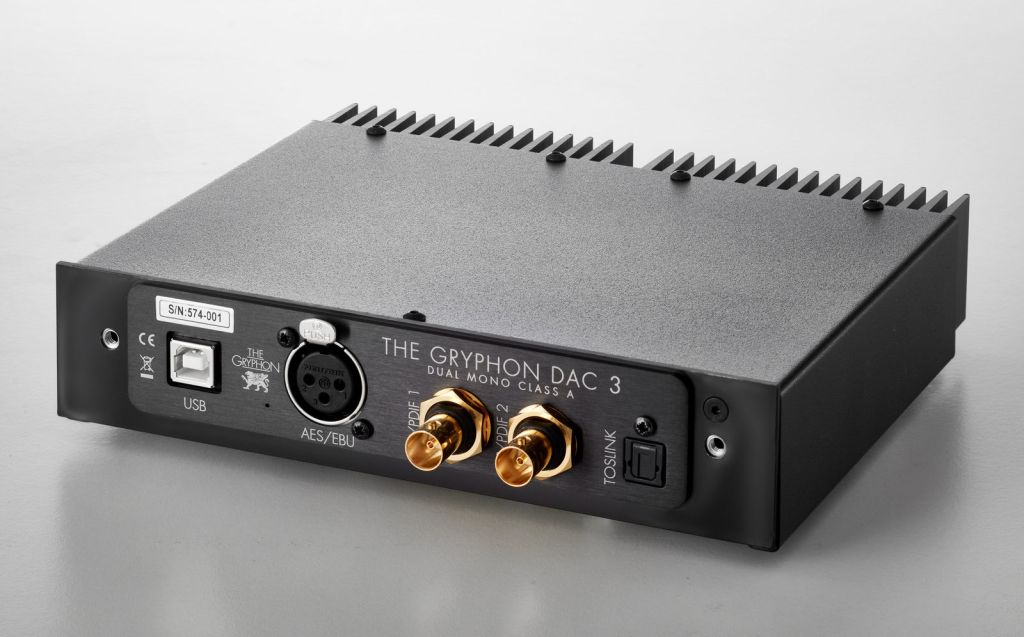
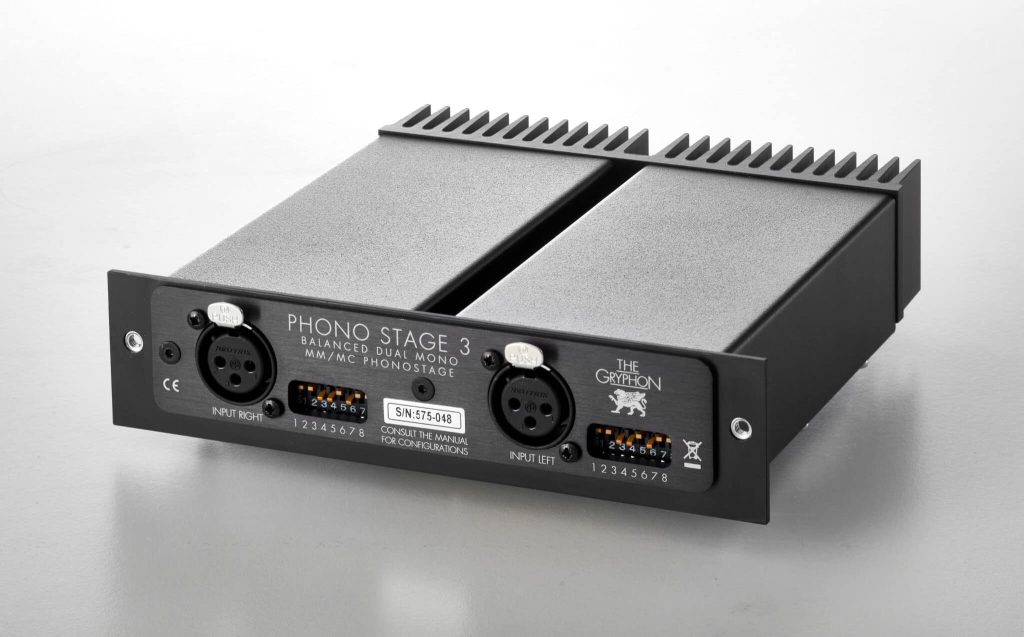
The amplifier I was lent was fully loaded, with the DAC and the phono stage fitted, and I have to confess I haven’t tested either. One thing is vaguely inconvenient: the phono board has XLR inputs, which is very unusual, and Gryphon swear it’s absolutely vital. For my turntable that would mean ordering a lead. I didn’t want to use adaptors and then judge it on that, and Gryphon’s manual says to avoid them anyway. To be fair, I had so much fun streaming that I didn’t need to reach for the vinyl. It had all the naturalness and fun factor already.
How it sounds
I’ve got a really cheesy word for it, a cringe saying: it has boogie factor. I wouldn’t call it engaging, because to me that almost has a negative connotation, as if it is hard work and you have to make yourself listen. It’s engrossing. There’s so much fun to be had listening to it, and it’s easy. There’s so much drive. Orchestrations come alive. I was sat there conducting the bands. It’s superficially amazing, and when you listen deeper it’s even more fascinating.
Guitars, layers and the crunch region
The first track in my notes is “Run the Numbers” by Everything Everything. When the guitars come in for the first chorus there’s a reverb around them that makes them sound huge, off-the-scale huge. It was like hearing that guitar for the first time, in a new way. Then, on the second chorus I think, an extra guitar riff comes in that I can only describe as punctuation: extra layers that accent parts of the arrangement.
I play guitar, bass and drums. The drums came when my nan passed away and left me a thousand pounds with a note saying to do something fun with it: don’t save it, don’t be boring. So I bought a drum kit. With the Gryphon I hear what has been designed into a song, and the energy the musicians put in: how they’re smashing the cymbals, how the bassist is trying to drive it through. It’s massively addictive.
My notes say presence, detail, separation and the crunch of guitars. The Gryphon finds that detail not in the very highest frequencies but somewhere quite satisfying in the midrange, in what I’m calling the crunch region. Jess and I looked it up: presence, somewhere around 2 to 5 kHz. Maybe it’s lifted ever so slightly by this amplifier, or maybe it just isn’t sucked out as it might be in others. Whatever it is, it’s so well judged that it never feels uneven. It displays continuous detail across every element of even a complicated mix.
Matt had sent me the Hi-Fi News review, where the reviewer says that by the end of one song he wanted to give the amplifier a round of applause. I’d literally had that moment with the Everything Everything track.
Bass with the start of the note and the end of it
The bass brings me back to Chord Electronics. Chord’s leading-edge transient response is mega, and it makes amplifiers with toroidal transformers sound soggy in the bass. Somehow the Gryphon does both. It has the leading-edge transients of a Chord with the tonal colour of something like the Mac: the start of the note from the Chord and the end of the note from the Mac. My notes say “rich yet percussive bass”. It keeps control and still lets the bass bloom. Normally those are contradictions and you pick one. Here you really are getting both.
Felix Laband’s “Dirty Nightgown” is a more subtle, electronic thing, full of clicks, pops and crunchy textures. The bass lines are quite subby, so they’re hard for an amplifier to control and harder still to make percussive, because it’s that soft, squidgy sub. The Gryphon still does it, incredibly well. There are toms in there too, and you can hear the skin tension in the reverb and the pitch of the different toms tracking higher and lower through a roll. As a drummer, that’s just mad.
Delicacy, and the room in the recording
“Perfect Blue Buildings” by Counting Crows showed all of this. You hear the different types of strike on the snare. I don’t know whether he really is changing sticks, but it sounds as if he goes from the kind made of a bundle of little canes, to proper sticks, to maybe brushes. It’s a really delicate piece of drumming, and you hear the dynamic rise and fall of the whole song.
On Billie Eilish’s “Your Power” you can hear the plectrum going down through the four or five strings of the chord, every one of them. She sings almost whisper quiet, but she picks out the consonants perfectly, and the delicacy of those little clicks and pops is mental. The bass line is a big, swelling, throbbing thing with a papery texture over the top that I’d never heard before. The Gryphon controlled the swells and still kept that texture. Against bass in my notes I’ve just put: wow.
“Birch Tree” by Foals has the same constant detail in every part, and yet there’s zero treble emphasis, so you don’t get the fatigue. It shouldn’t happen, but it does.
Then there’s “Jesus Gonna Be Here” by Tom Waits, from Bone Machine. It’s recorded in a weird, echoey room, and it’s so palpable that even without shutting your eyes you get a strange dual sensation, almost an unease: I’m in an echoey room, but I’m not, but I feel as though I am. If I concentrated I could probably draw the dimensions of the room, and how far he is from the microphone, perhaps 15 feet back. Try it on your own system.
The effect of all this is like falling back in love with bands. In the 90s you’d have about five cassettes for your Walkman and you got to know the band members’ names, so somehow you were listening to them as humans. I’m listening like that again. I’ve been late to pick up the kids because I got too engrossed and carried away.
Against the McIntosh MA12000
This breaks my heart to some extent, because I was so in love with the Mac. Now it feels a bit like a toy, I have to confess. That’s not to belittle it. The Mac is lovely. When I put it back in, the word I’d use is ethereal. With its reverbs and its watercolour background, against the slightly drier presentation of the Gryphon, it creates a lovely, almost bigger soundstage. But it’s so much less focused, and it isn’t really bigger, more a taller, echoier space. It felt less dense, almost slightly thin.
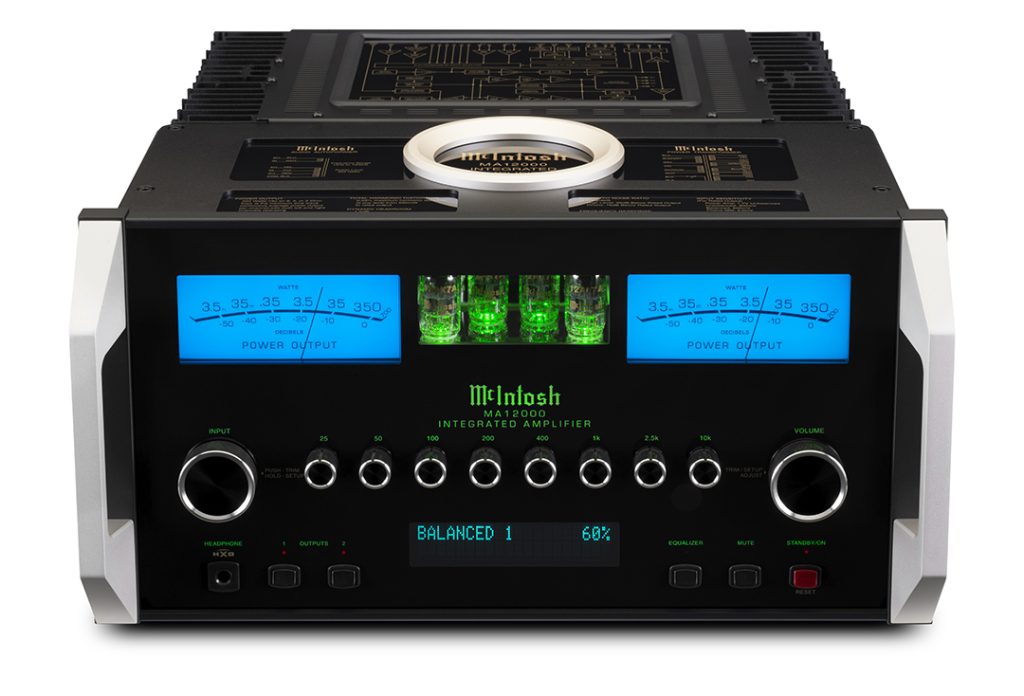
It had softer bass. I described it to Jess as marshmallow bass, or cloud-like bass. The Mac does the pitch, the sustain and the bloom, but it loses the percussive leading edge, which as a bassist is really important to me, and kick drums become softer and woollier.
The bigger difference is focus. With the Mac, elements of the mix would move forward and then go back into a vague, watercoloured background, with one or two things present, the vocalist or a snare or a kick drum, popping forward for an instant. The Gryphon does this thing where it feels like everyone is there, all the time. You can feel it forcing the Dynaudios to do things they don’t get forced to do with the Mac.
I think the only other time I’ve heard that was in the early 2000s, with Chord Electronics SPM 6000 monoblocks, Chord’s reference preamp, the DAC64 and the Blu transport. I heard it with a good friend and client, and funnily enough Counting Crows was one of the things he put on. I remember thinking: there’s the drummer, in front of me.
We’ve set the two amplifiers out feature by feature in McIntosh vs Gryphon: MA12000 or Diablo 333?
Diminishing returns? Not here
The Mac is cheaper, and it gives you a DAC and a phono stage for free, where on the Gryphon they’re extra-cost modules. At the time of writing the MA12000 is £20,790 in our shop and the Diablo 333 is £24,500 before modules. So the Gryphon is a chunk more expensive.
“Diminishing returns” is a statement I massively disagree with, but I don’t often have a specific example to counter it with. Now I do. In my notes I’ve written “proof of diminishing returns being complete nonsense”. The Gryphon is so much better musically, not just as hi-fi but in how much I’m loving music and how little deliberate, conscious, active listening it takes to enjoy it. I thought the Mac was a master of that. The leap from a bog-standard integrated up to the Mac is a smaller gulf than the leap from the Mac to the Gryphon.
Films and television
As a side note, I use it for television, Netflix and whatever else, and there’s something about its tonality and drive that is absolutely brilliant for cinema: the dynamic grip and control, and the vocal clarity. It’s so easy to hear what people are saying that you can switch the subtitles off, and even at lower volumes you get all the grunt and dynamics. I’d love a commission to design a cinema room around a stack of Gryphons, because I’d be so intrigued to know what it would sound like. My instinct is: unbelievable.
Quirks and criticisms
- It’s heavy and awkward to install, and the conical feet are sharp enough to damage furniture.
- The phono module has XLR inputs. For my turntable that means a new lead.
- The DAC and phono stage cost extra, and I can’t tell you how they sound because I haven’t tested them.
- Its presentation is slightly drier than the Mac’s. The ethereal, watercolour thing is something the Mac does really well.
- That crunch region may be lifted ever so slightly. If it is, it’s very well judged.
Who it’s for, and who it’s not
Matt mentioned a reviewer who said the Diablo rivals quite a lot of pre and power amplifiers, and I’d agree. I’ve had hi-fi moments with it that I’ve simply not had before, and that includes show systems. There’s something it does that you just can’t buy anywhere else, apart perhaps from the Apex and Commander, and then you need many more square metres and many more zeros on the budget.
It’s not that the Gryphon trounces all other hi-fi. I’ve heard the big dual-mono McIntosh amplifiers on a huge pair of Klipsch Jubilees, and for scale, for the sense of being transported, that’s another level from my system.
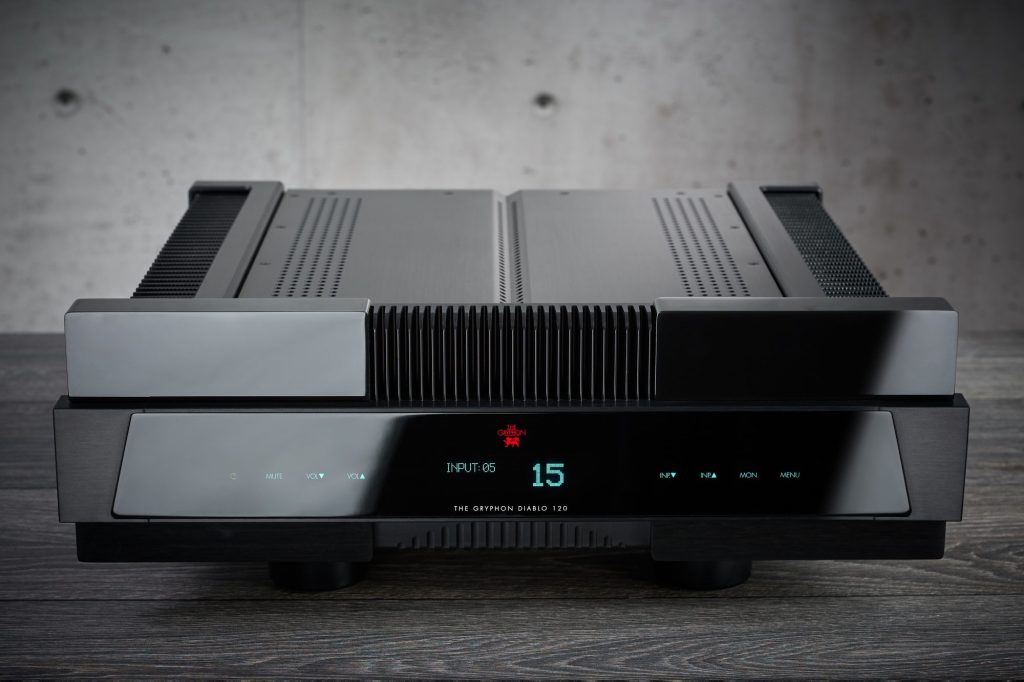
If you need a DAC and a phono stage, and your budget doesn’t go to a fully loaded Diablo but you could muster the price of the Mac, that’s where the Mac still makes sense. Matt’s answer was Gryphon’s smaller Diablo 120, which is rated at 120 watts into 8 ohms. He’ll have to prove that one to me. A hundred and twenty watts sometimes isn’t enough, probably quite often in my humble opinion. I love the grip and control of more power.
Verdict
You can’t have it back. That’s the first thing on the last card of my notes. I’m keeping it, and if Matt does want this one back he’ll have to get me a different one. It becomes my new reference for anyone coming round. If I’ve got two minutes, five minutes or half an hour of somebody’s time to convince them that hi-fi is a thing, this is the amp I want to do it with.
Is it the world’s best integrated amplifier? It’s the best one I’ve ever heard. I think of it as an amalgamation, the best of both worlds: it’s transient, but it’s bloomy and lovely. Nothing else has come even close. I don’t think you can convey how special it is by saying “it’s special” on camera.
Frequently asked questions
What is the Gryphon Diablo 333?
Gryphon is Danish: fact number one. The Diablo 333 is its big integrated amplifier and it replaces the Diablo 300, which is a bold move: Gryphon says the 300 sold in the thousands.
How powerful is the Gryphon Diablo 333?
It delivers 333 watts into 8 ohms, which is very specific, 666 watts into 4 ohms, which is very ominous, and 1,100 watts into 2 ohms.
How much does the Gryphon Diablo 333 cost?
The practical details: two balanced XLR inputs, two single-ended RCA inputs, a tape loop and subwoofer outputs, with a DAC and a phono stage as optional internal modules. At the time of writing it’s £24,500 in our shop, before either module.
How does the Gryphon Diablo 333 compare with the McIntosh MA12000?
Its presentation is slightly drier than the Mac’s. The ethereal, watercolour thing is something the Mac does really well. The Mac is cheaper, and it gives you a DAC and a phono stage for free, where on the Gryphon they’re extra-cost modules.
Is the Gryphon Diablo 333 the world’s best integrated amplifier?
It’s the best one I’ve ever heard. I think of it as an amalgamation, the best of both worlds: it’s transient, but it’s bloomy and lovely. Nothing else has come even close.