The HHT view · McIntosh MA12000 and Gryphon Diablo 333
McIntosh versus Gryphon is not a choice between a serious amplifier and a lifestyle alternative. Both make substantial, beautifully finished electronics with distinctive identities. The useful question is which amplifier best fits your loudspeakers, sources, room and taste.
The McIntosh MA12000 and Gryphon Diablo 333 make a particularly revealing comparison. McIntosh includes a broad set of digital and analogue facilities; Gryphon makes its DAC and phono stage optional. Here is how we would approach the decision, including Dan Crick’s own listening perspective.
The short answer: complete specification or modular choice?
- Start with the MA12000 if you want a DAC, moving-magnet and moving-coil phono inputs, television audio over HDMI ARC and adjustable tone controls included in one amplifier.
- Start with the Diablo 333 if you value a more stripped-back amplifier configuration, already own a DAC or phono stage you want to keep, or prefer to add those facilities as internal modules.
- Audition both if either meets the practical brief. Features narrow the shortlist; they do not settle which presentation you will enjoy with your speakers.
In Dan’s analogy, these are two different muscle cars, not a muscle car versus an economy runabout. Heritage, physical presence and craftsmanship matter to their appeal. Neither badge removes the need for careful system matching.
What is included, and what costs extra?
McIntosh MA12000: the facilities are already there
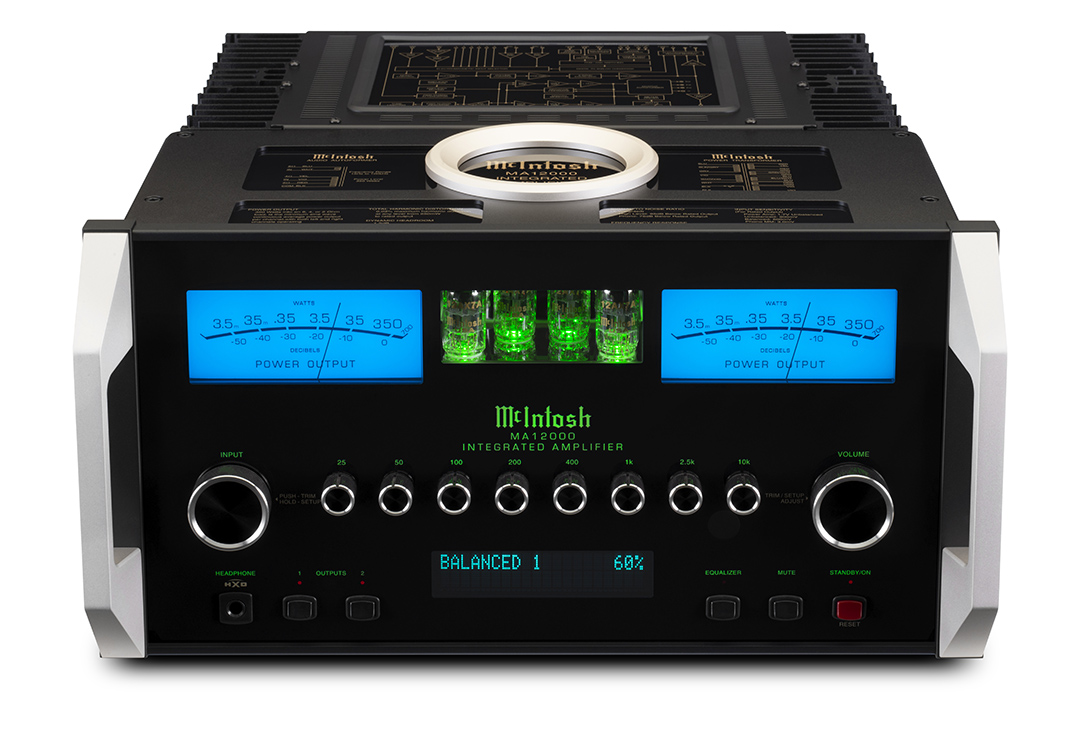
The MA12000 includes McIntosh’s DA2 digital module, separate MM and MC phono inputs and an eight-band analogue equalizer. Its seven digital inputs comprise two coaxial, two optical, USB, MCT and HDMI ARC. That HDMI connection takes television audio; it is not an AV receiver’s video-switching hub.
You can use an external DAC or phono stage through the appropriate line input, but the MA12000 is not offered as a cheaper factory version with its DAC and phono facilities deleted. A buyer who needs those features may appreciate the completeness. Someone who already owns favourite source electronics should assess the package without assuming every included input will be used.
Gryphon Diablo 333: choose the source modules you need
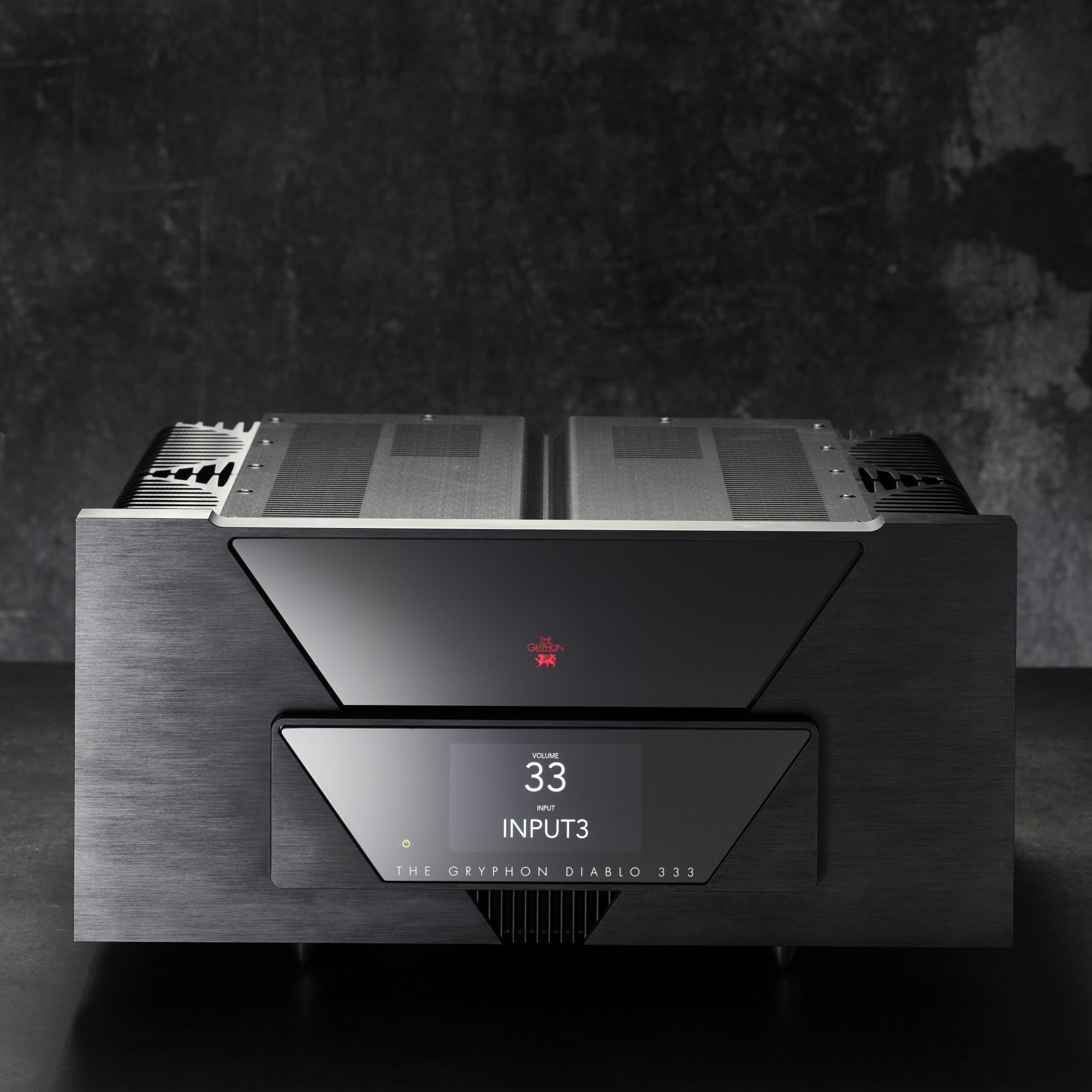
The Diablo 333 offers the DAC3 digital module and PS3 MM/MC phono module as options. They are not included in the standard amplifier configuration. The PS3 is an internal module, not a standalone phono stage; turntable connections and cartridge loading need checking when specifying it.
DAC3 provides USB, AES/EBU, coaxial S/PDIF and optical inputs. Its connection set is different from the MA12000’s: do not assume an HDMI ARC socket or a built-in network streamer. A DAC converts a digital signal; a streaming source still has to supply it.
A Diablo 333 equipped with both modules is the more expensive package in our current comparison. We would quote the exact configurations together, including VAT and installation requirements, rather than compare a bare Gryphon price with a fully equipped McIntosh. Leaving modules out can make sense if your existing source components already do those jobs; modularity alone does not prove better sound.
Dan’s take: watercolour space or sharply drawn focus?
Dan describes the appeal of McIntosh’s valve and hybrid presentation as a little more ethereal: a larger, more watercolour-like sense of space. He can find the bottom end softer and more rounded, in an appealing rather than a derogatory sense. Gryphon, by contrast, often gives him a more etched, focused, high-impact and driving impression.
Those are Dan’s listening impressions, not measurements or a claim that every McIntosh and every Gryphon sounds that way. This guide does not report a new level-matched, controlled MA12000-versus-Diablo 333 test. Loudspeakers, the room, recordings and listening level can all change the result.
He also hears a darker midrange character in some Gryphon combinations, but is deliberately cautious about turning that into a brand rule: there are different flavours within the range. Treat it as something to listen for, not a specification. If one presentation draws you further into the music, that preference is more useful than declaring a universal winner.
For more of our model-specific perspective, read our Gryphon Diablo 333 review.
Valves and Class A describe different things
The MA12000 is a hybrid: four 12AX7A valves serve its preamplifier section, while the power amplifier is solid-state. It is not an all-valve output amplifier. McIntosh also makes fully solid-state integrated amplifiers, including the MA9500. Gryphon’s amplifier approach is solid-state rather than valve-based, so wanting valves is a genuine reason to explore the appropriate McIntosh models.
Class A and Class AB, however, describe operating arrangements, not an alternative word for “solid-state”. They are not the opposite of valves. Nor is it correct to call every Gryphon integrated amplifier fully Class A.
Fidelity’s technical review reports that the Diablo 333 delivers its first eight watts into eight ohms in true Class A, with Class AB operation above that region. That is a qualified, load-specific account of this model, not a claim that all 333 watts are Class A or that the same figure applies across Gryphon’s range.
Power: match the loudspeaker, not just the number
McIntosh rates the MA12000 at 350 watts per channel into two, four or eight ohms using the appropriate Autoformer output taps. Gryphon rates the Diablo 333 at 333 watts into eight ohms, 666 into four and 1,100 into two. These ratings reflect different output arrangements; 350 versus 333 does not establish a winner.
We would look at the loudspeaker’s impedance behaviour and sensitivity, listening distance and required playback level. We would also check the manufacturer’s connection guidance. Both amplifiers are heavy, substantial installations that need suitable support and ventilation, not an enclosed shelf chosen after the purchase.
Tone controls are useful, but they are not room correction
The MA12000’s eight-band analogue equalizer lets you adjust tonal balance. It can be useful when a recording feels too bright or bass-heavy, or when you want a different balance at a particular listening level. It can also be bypassed.
It does not measure the room, time-align speakers or perform automated room correction. Nor does it remaster a recording. Positioning, acoustics and loudspeaker choice remain important; broad tone adjustments cannot repair every cancellation or excessive bass decay.
Appearance and illumination: a choice you can live with
McIntosh’s blue meters, green detailing and visible valves are a large part of its identity. Gryphon’s black, sculptural casework is distinctive in a different, generally more restrained way. Dan regards both as desirable objects with impressive fit and finish.
If illumination is a concern, the MA12000 manual provides separate settings for the meter lights and tube lights, plus a bright/dim information display setting. That is more precise than promising that every light on every McIntosh can be switched off. The Diablo 333 offers adjustable display brightness and automatic dimming or display-off behaviour.
Our recommendation: build the shortlist around your system
Choose the practical specification first: loudspeakers, sources, turntable cartridge, television connection, shelf space and any equipment you intend to retain. Then listen for the character that suits your music. McIntosh’s included facilities may simplify one system; Gryphon’s optional modules may better respect another.
Explore our McIntosh and Gryphon ranges, or browse integrated amplifiers. Based in Bath, Hidden Home Technology can help compare configurations and arrange a suitable audition. Tell us about your speakers and sources, or call Dan on 07736 454506; we will confirm the models and demonstration arrangements with you.
McIntosh versus Gryphon: common questions
Is McIntosh better than Gryphon?
There is no universal winner. Compare specific models, speaker compatibility, source connections and your listening preferences. The MA12000 includes extensive facilities; the Diablo 333 offers optional DAC and phono modules.
Is the McIntosh MA12000 an all-valve amplifier?
No. It is a hybrid integrated amplifier with four 12AX7A valves in its preamplifier section and a solid-state power amplifier.
Is the Gryphon Diablo 333 fully Class A?
No. Fidelity reports that the first eight watts into eight ohms operate in true Class A, with Class AB operation above that region. The figure is specific to this model and load.
Do both amplifiers include a DAC and phono stage?
The MA12000 includes its DA2 digital module and MM/MC phono inputs. The Diablo 333 offers DAC3 and PS3 as optional internal modules. Compare complete configurations when requesting prices.
Does the MA12000 equalizer replace room correction?
No. Its eight-band analogue equalizer adjusts tonal balance; it does not measure the room or perform automated acoustic correction. Speaker placement and room acoustics still matter.
Technical references: McIntosh MA12000, the MA12000 owner’s manual, the Diablo 333 owner’s manual and Fidelity’s review linked above. Listening perspective supplied by Dan Crick, Hidden Home Technology. About HHT.