Pre-Amplifiers
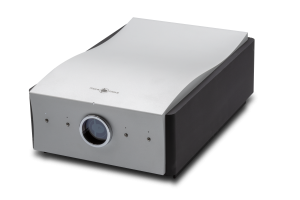
Mola Mola Lupe Phono Stage
£7,299.00
Standalone MM/MC phono stage with three RCA inputs, one balanced input, adjustable loading and equalisation, and balanced and unbalanced outputs.
Description
Description
Lupe is Mola Mola’s standalone phono preamplifier for vinyl playback. It raises and equalises a cartridge’s output for a line-level amplifier input. It is not a general-purpose line preamplifier or a power amplifier.
Match it to the cartridge and record
Independent MM and MC stages allow cartridge-appropriate operation. Adjustable gain, resistance and capacitance help match the cartridge; selectable equalisation extends beyond standard RIAA to historical cutting curves. A subsonic filter is specified at −3dB at 20Hz. Choose settings from the cartridge and record requirements rather than assuming one preset suits everything.
Multiple turntables and convenient control
Three single-ended inputs and one balanced input allow multiple turntable or cartridge connections. Lupe provides balanced and single-ended outputs. Settings can be stored in presets and adjusted through the Mola Mola Remote app; the switching remains in the analogue domain.
Where Lupe fits
Connect Lupe to a suitable analogue line input on Makua, Kula or Grimm MU2. Do not connect its line output to another phono input. Tambaqui has no analogue input, so Lupe cannot connect directly to that DAC.
Lupe or the internal phono module?
Choose Lupe for a standalone phono stage with its own supply and multiple inputs. The Mola Mola phono module is the internal option for compatible Makua and Kula units. Tell us your cartridge, turntable and amplifier so we can check the right route.
Manufacturer specifications and documentation.
The wider view: Mola Mola Lupe reviews in brief
The Lupe is Mola Mola’s phono stage. Mola Mola took the phono boards of its Makua preamplifier and gave them a chassis and a power supply of their own, as it had already done with its DAC boards to make the Tambaqui. Up to four tonearms can be connected at once. An app sets the gain and loading of each input and offers 43 equalisation curves, so records cut before RIAA became the standard play as they were meant to.
Kevin Fiske reviewed it for The Ear in May 2024 and again for hi-fi+ that October. He found it “almost preternaturally quiet”, made it his reference and bought the review sample. Greg Weaver of pt.AUDIO put his notes down within minutes of the first record and thought it flexible enough to be the last phono stage most listeners ever buy. Jason Thorpe tested it for SoundStage! Ultra in October 2025 and wrote that he “couldn’t find a single thing wrong with it”.
It is worth knowing that the review sample needed some 300 hours of playing before it settled. Fiske calls the sound neutral and forensic, so a listener who wants a lush and valve-like presentation may prefer another. Weaver’s one doubt was pitch and texture in the deepest bass, below about 40 to 45 Hz, which he thought most listeners would never notice.
It belongs with a serious record collection, above all one played on more than one turntable or one with older pressings. It connects to a line input on the Makua, which we also sell. Tell us your cartridge and amplifier and we will check the settings with you.
What the reviewers say, in a nutshell
- The Ear, Kevin Fiske, May 2024. Unusually flexible and forensically neutral. He bought the review sample.
- hi-fi+, Kevin Fiske, October 2024. Very quiet with a big and muscular sound. Now his reference.
- pt.AUDIO, Greg Weaver, November 2023. Musical and versatile with one small doubt in the deepest bass. Enthusiastically recommended.
- Positive Feedback, Wojciech Pacuła, January 2024. Among the best phono stages at any price.
- SoundStage! Ultra, Jason Thorpe, October 2025. Wholly neutral and the most satisfying phono stage he has used.
Read what the critics say about more of our phono stages in The Hi-Fi Review Bible.
Specification
Input noise (MC): 0.35nV/rtHz
Input noise (MM): 0.9pA/rtHz
Sensitivity: variable from 30uV to 5mV
THD, IMD: not measurable
RIAA conformance: +/-0.1dB
Subsonic filter -3dB @20Hz
AVAILABLE TIME CONSTANTS
t1: 200, 250, 318, 400, 450us
t2: 50, 64, 75, 100us
bass shelf: 14, 18, 20dB