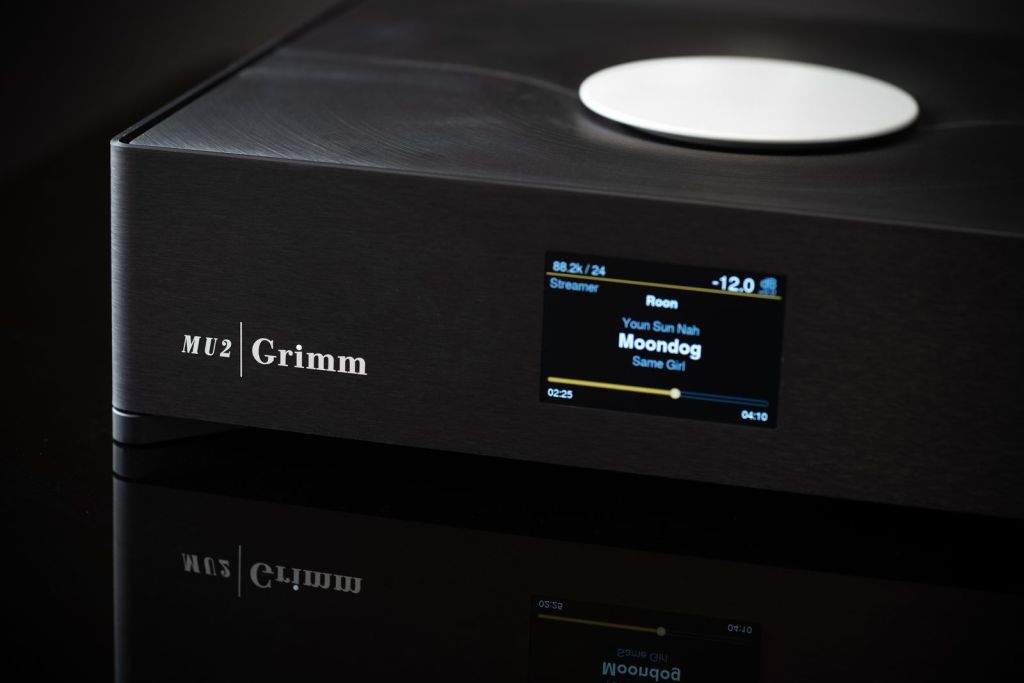
The Innuos ZEN NG has a flawless user experience and, with its PhoenixUSB output fitted, a detailed, unforced sound with high frequencies that are an absolute joy. My verdict is simple: buy it. If you haven’t got the space or the budget, the Grimm MU2 I compare it with here is the alternative to have.
This is the written version of the video review I made with Jess, published in February 2025. Prices and product details are as they stand at the time of writing.
One thing to be clear about from the start. The ZEN NG is a streamer and server with no DAC of its own: without a DAC there is no sound, and the DAC is a good chunk of the sound as well. I reviewed it with the Mola Mola Tambaqui. The Grimm MU2 I compare it with is a streamer and a DAC in one box, so that comparison is based on the fact that the ZEN NG is with the Tambaqui.
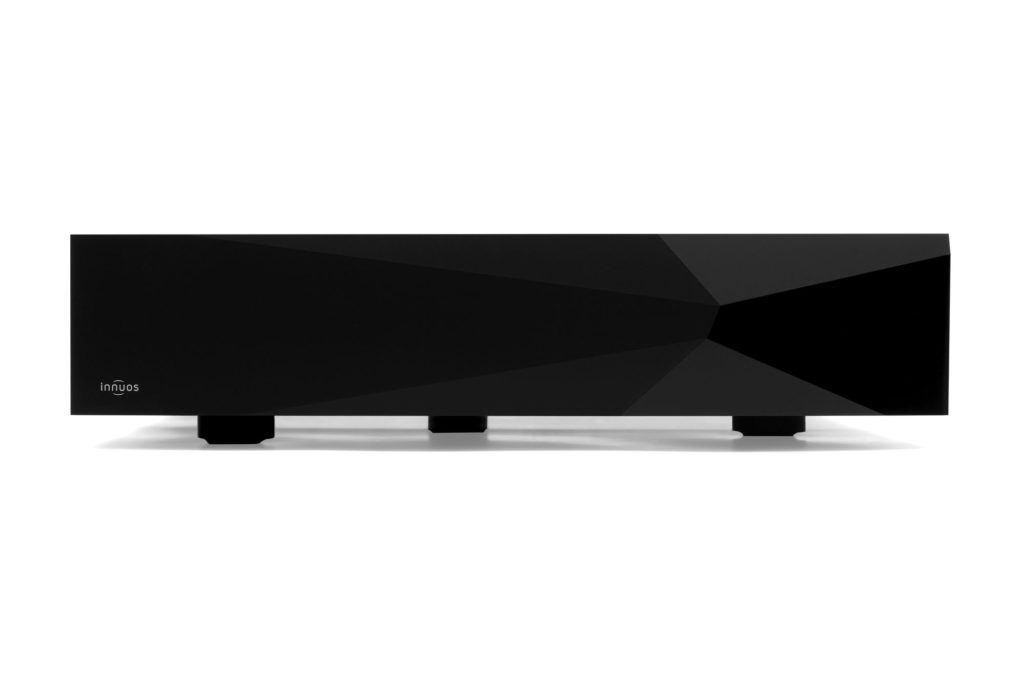
What the Innuos ZEN NG is
The Innuos ZEN NG is a high-end streamer and server. It runs on Innuos’s own software, the Sense app. It supports Roon, and it handles UPnP if you want to use other software or streamers that need it. It’s compatible with Tidal, Qobuz and stored files, and Innuos also lists Tidal Connect, Qobuz Connect and Spotify Connect.
It’s DAC-less, so it needs a DAC after it. There’s a USB output for that as standard, plus one slot for an optional output board: coaxial digital (Innuos’s SPDIF board, which also gives you optical and AES), I2S, or the upgraded PhoenixUSB, which is reclocked and has much less jitter on it. That one is highly recommended.
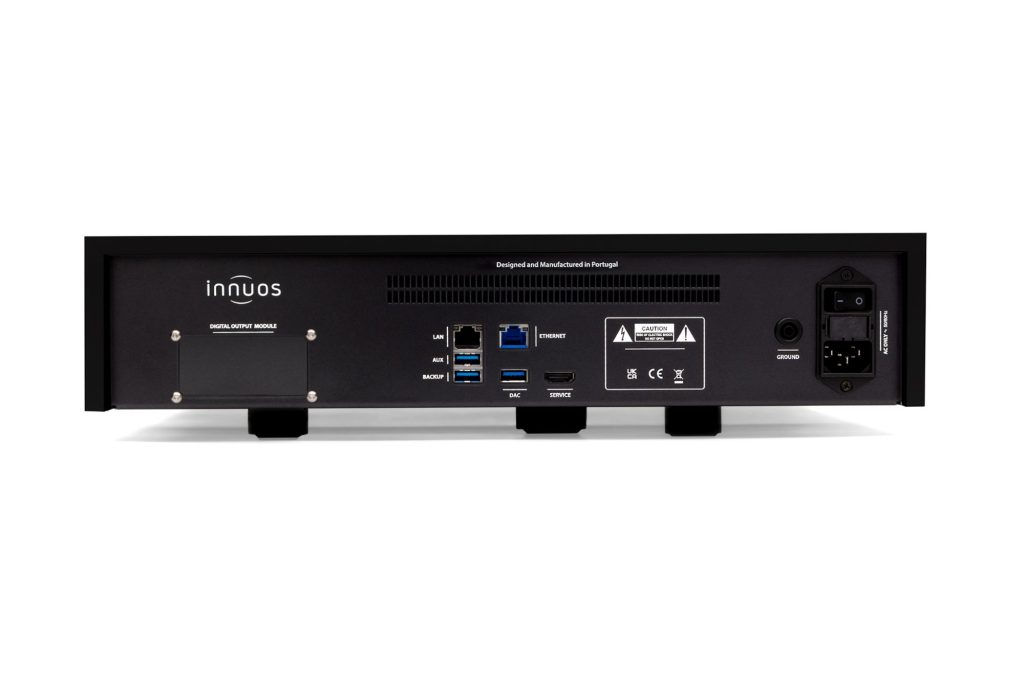
The NG stands for Next-Gen. I think that’s largely about the new motherboard architecture and the gallium nitride power regulation in the power supply. I have no idea on earth what that is or what it’s getting at, but if it’s the thing responsible for the sound quality, it’s really good.

Internal storage comes in 2, 4, 8 or 16 terabytes, or none. At the time of writing the ZEN NG starts at £10,300 in our shop with no storage, rising to £15,000 with 16TB. The output boards are extra.
For context, Innuos dates its story from 2009 and is based in Faro, in Portugal’s Algarve. The ZEN NG sits below the ZENith NG in the ZEN Next-Gen series, and Innuos says it can be upgraded to one later. There’s no CD drive: ripping needs an external USB drive.
Setting it up and living with it
The standout feature for me, the one I really need to mention, is that the user experience is friction-free and flawless. Whether you want it as a Roon server, or using Innuos Sense, or as an endpoint, or server only, each of those options is just a tick box. You press go and it goes off and does it. It prompts you for your Qobuz and Tidal details. Backing your music up off it is incredibly simple. Everything just works, first time, every time. There’s no faff, no having to stand on one leg and do it this way. I can’t say enough about that.
After that there isn’t much else to it. It’s a plain black box. You turn it on, you set it up, and that’s kind of it.
All Innuos products are built nicely, but the ZEN NG casework is unbelievable. It’s like billet aluminium everywhere, and it weighs a ton. Innuos’s own figures are a 10mm-thick CNC-machined aluminium chassis and 12.7kg.

The system I heard it in
The ZEN NG comes in so many permutations that I need to be very clear about how I was using it. I spent very little time with the standard USB output, because I had the PhoenixUSB board from about day two. The second I got it I was too excited, so I fitted it, and the difference was so remarkable that I never went back. I haven’t got many specifics on the standard output. All I can say is that the Phoenix was loads better, and for the extra it adds to the price I think it’s a no-brainer.
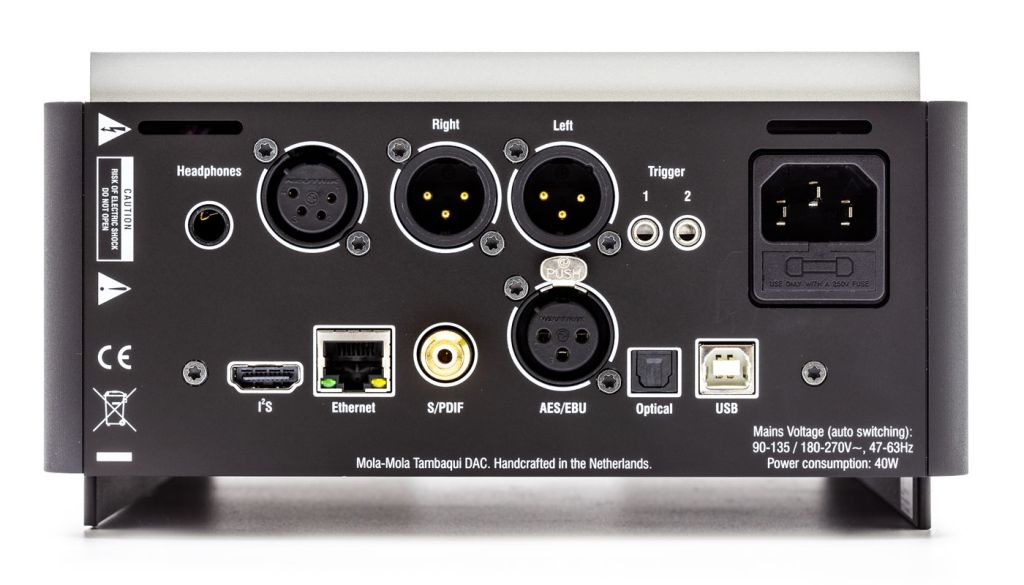
So this is the ZEN NG with its PhoenixUSB output, through a Chord Epic USB cable, into a Mola Mola Tambaqui DAC. I used two high-end integrated amplifiers, the Gryphon Diablo 333 and the McIntosh MA12000. The speakers on the end were the Marten Parker Duo Diamond Edition and the Dynaudio Heritage Special.
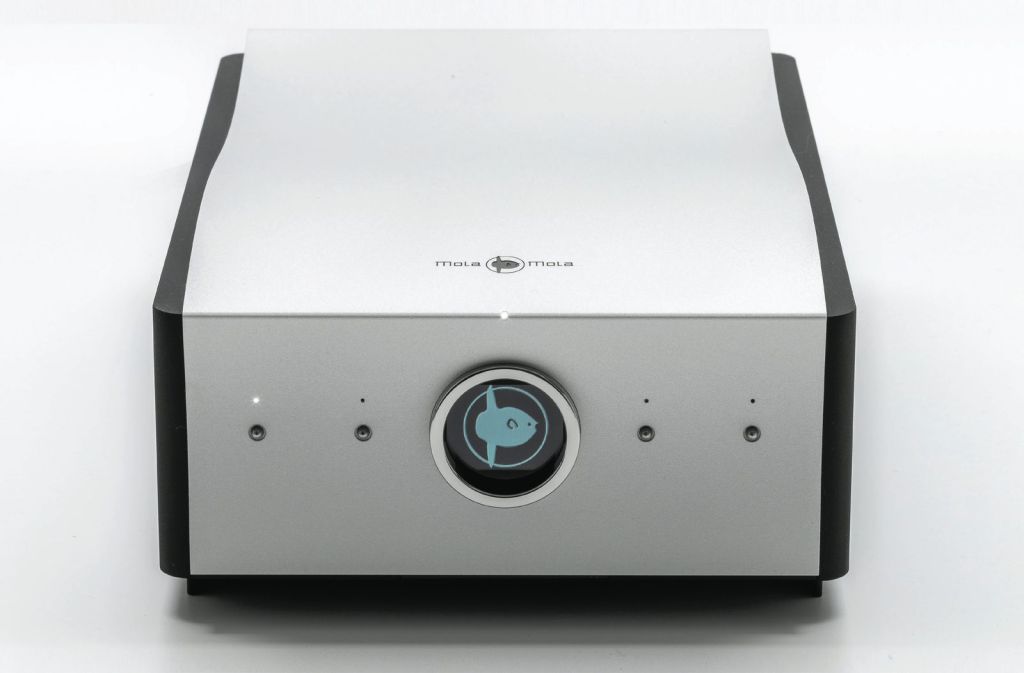
That’s the context of this review: one offboard DAC, and you can’t review it with every offboard DAC. I’ve tried various DACs over the years with our previous Innuos, the ZENith Mk3, and I know the Tambaqui is epic, so I’m happy with it as a reference.
How it sounds
It’s detailed and unforced. A lot of this applies without the PhoenixUSB board: it’s the same, only more so with it.
Jess and I talked about the detail when we were comparing it with the MU2: it’s a spotlight sort of detail. It’s like shining a really nice light on someone, a bit like the studio we filmed in. The detail is way more present, but there isn’t really a downside. It isn’t overexposed or contrast-enhanced. It’s just clear and apparent, with no harshness.
The result is that there’s so much to listen to in the music that wasn’t there before. You can listen in. You hear reverb tails, production tricks, the musicians’ skill. With a snare drum you hear the difference between all the different strikes, where the stick lands on the skin, at the edge or in the middle. It’s unbelievable. Yet at the same time it’s lovely. It isn’t analytical or clinical.
Innuos ZEN NG vs Grimm MU2
I’ve reviewed the ZEN NG in particular against the Grimm MU2, a streamer, DAC and preamp in one box. From my listening notes: next to the MU2, the Innuos has more of a euphoric quality to its highs. There’s an air and grace about it. If there’s a dynamic swell in the high frequencies, it can create that sense of euphoria, and goosebumps, noticeably more. It’s more enveloping.

The MU2 seems to emphasise things ever so slightly lower down the frequency spectrum. It’s almost as if it shifts your focus into the midrange: the tonal colour of instruments, the timbre of the drums rather than the detail in the drums. It’s more the wood than the stick impact.
Some history. The previous Innuos in our reference system was the ZENith Mk3. With the ZENith going into the Tambaqui, the MU2 was the clear leader. The tonal colour, the stability of the soundstage, the three-dimensional tangibility, that palpable sense of it being there in front of you: all of that was greater with the MU2. The Tambaqui with the lesser server on it could also be bright in the negative sense, a bit trebly, a bit splashy at times, depending on what you were listening to.
Go to the ZEN NG, especially with the reclocked Phoenix output, and the sophistication in those high frequencies comes out. They become an absolute joy, and you never want to give them up once you’ve heard them. The ZEN NG has tonal colour too, and all of the things the MU2 has. I just think the MU2 is a specialist in that.
The MU2, as Jess puts it, “has that ease of listening”, and it does. It lets the music play a bit more and stops you focusing on the hi-fi. The details are there, but they sit slightly lower in frequency: the macro details, not the fine ones. It ties the detail into the sound of the instrument, so you have to listen in for it, but you don’t get it forced on you, which is nice.
There’s something in the treble as well. I had people telling me early on, Jess among them I think, that the MU2 was the brighter one, and I couldn’t hear it at all. The night before we filmed, I did hear something. There’s so much air and softness, yet extension, in the ZEN NG’s highs. The MU2 is slightly lower down in the treble region, and that can be a little harder. With cymbals you hear less of the wobble, shimmer and sustain, and more of a cymbal noise as one thing. It’s so subtle, though.
Jess heard the step up too. With the NG, she says in the video, “it was even more remarkable how much detail and separation there was between all the different audio tracks that we were listening to”. It was easy to listen to, but for her it was “more in your face”.
The Grimm and its built-in Roon Core
Something else came out of these comparisons. If you use the Grimm as the Roon Core as well as the streamer, it isn’t as good as when the Roon Core is offboard. That contradicts most reviews of it, so I wonder whether other reviewers have used a bog-standard Roon Core, like Roon running on a Mac, rather than a specialist offboard server.
The track that showed it was All You Children by Jamie xx. It has a big bassline, like a sub line, with a funny sort of wobble to it, an extra layer of fatness. With the Grimm as the Roon Core you lose that. With the ZENith Mk3 as the Roon Core, playing the same track through the Grimm, you suddenly got this extra layer of bass, wrapped around, with more detail. It was the one thing where you could switch between the two and go: there it is. Jess backs me up: “There was definitely a difference.”
In longer listening I was getting more of those special hi-fi moments with the ZENith as the core. You go through funny phases with hi-fi, in love with your system and then less so. I’d been a bit out of love with ours and couldn’t put my finger on why, and with hindsight I think it corresponded with switching the Roon Core from the ZENith to the Grimm. I haven’t had that since I stopped using the Grimm as the core. We are talking subtleties, though, in a very revealing system.
The ZEN NG does that job too. Used as a server it improved the Grimm. It’s an amazing server, and that I can be sure of.
The PhoenixI2S board: unfinished business
I’ve also got the PhoenixI2S board, and I need to revisit it under controlled conditions. What I do know is that the little oven-controlled clocks take a few days to fully burn in and stabilise, and certainly a few hours before the temperature is regulated, so first impressions are misleading.
It also went in just after the Gryphon Diablo 333. I’d spent a few days with the Diablo and suddenly fallen in love with it. When I put the I2S board in, I fell out of love a little bit. I was hoping for an instantaneous wow, and it was much more subtle than that. I only listened to it for a night or two, a few hours in all.
But I have to acknowledge I was using some pretty dodgy HDMI cables compared with the USB cable. I only had a two-metre Chord Company HDMI, a notch up from their very basic one. The principle of I2S is that the clock goes down the cable on separate cores, and if picoseconds are the issue, I wonder whether two metres of HDMI undoes a little of that perfection. You probably need a one-metre cable of a higher standard. The alternative I grabbed out of the van was what we’d use on an HDMI matrix installation, a fine-gauge, flexible lead in a shorter length, and I think maybe I did prefer that.
There were so many variables changing, with the Marten Parker Duos in as well, that I put it back to the constant I knew, the PhoenixUSB.
I also wonder whether Mola Mola put more emphasis on the Tambaqui’s USB input than on its I2S input. I’m sure they would never just stick a connection on the back for the sake of it. What I mean is: did the USB get the extra special attention, as the way most people connect? I want to ask them. Once I know the Diablo 333, I’ll come back to I2S with a decent cable and give it a fair shot.
Upgrading from a ZENith Mk3
If you’re looking at upgrading from a ZENith Mk3, what can you expect? It’s really simple. It’s just a million times better, a million times being the exact amount. There’s more detail, more scale, more air. I can’t think of an element of the sound that wasn’t better. Everything gets better, and significantly so, and I say that as someone who thought the MU2 was the be-all and end-all.
Jess goes further in the video: “I’ve never experienced such a notable difference in hi-fi equipment before.” From a source component, I agree. It’s mega.
So, in a nutshell: upgrade your ZENith Mk3. If you’re looking for an improvement, you could do it without even listening, because it is an improvement and I don’t see a downside. (Innuos has since discontinued the Mk3 series.)
Servers matter, and so do streamers
Servers matter: that was a takeaway from all this. But streamers matter as well. Changing the clocking of the output shows that a server with a streamer is the sum of its parts. You need both to be really good to get a really good result.
Using the bog-standard USB output, I don’t think it would have beaten the Grimm. I really don’t. I’d still have kept the Grimm, for its tonal colour and its ease of listening. There’s not that much of a gulf between the ZEN NG on its PhoenixUSB output and the MU2, so the standard output would have plopped it back down beneath.
I know people will ask: what about a ZEN NG with this streamer, or that streamer? Well, the server matters, so yes, it’s going to get better. Is your streamer better than the standard USB output? It may or may not be. Is it better than the PhoenixUSB output? It’s going to have to be something serious.
Sense or Roon?
The ZEN NG arguably sounds better if you don’t use Roon and use the Innuos Sense app instead. That’s worth knowing if you aren’t into Roon.
I’m so into Roon, though. The added context it brings, the background on what you’re listening to, who the artists are, how it came about, the album reviews as you’re listening: it’s like a music magazine that you can listen to as you read. That creates love for the music and engagement with it, with my heart as well as my brain.
That’s not to belittle Sense. As Jess says, “it does have some good features to it”, like combining your playlists with your stored music. When I made the video, what you didn’t get with it was all of that background. The difference in sound quality going to Sense is great, but the engagement I get with Roon adds more for me, so personally I’m not that bothered. You could possibly make the ZEN NG better again than the Grimm just by using Sense rather than Roon. But Roon might be important to you.
Who it’s for, and who it’s not
All the elements of the ZEN NG have proved themselves to be really, really, really good, and it does more than you expect it to. It’s a Roon endpoint, a Roon server, a UPnP server, and it has its own software.
But buy the Grimm if you’re on more of a budget, because the context of this review is a ZEN NG with a DAC like the Tambaqui after it. The Grimm is so much more than a streamer. I’d buy the MU2 as a streamer alone, and it comes with a preamp, a volume control, digital inputs and analogue inputs. And it’s tiny. It’s a hi-fi in a box, shy of the power amps and speakers. An active pair of speakers and that tiny, weeny box will floor hi-fi that takes up ten times the space.
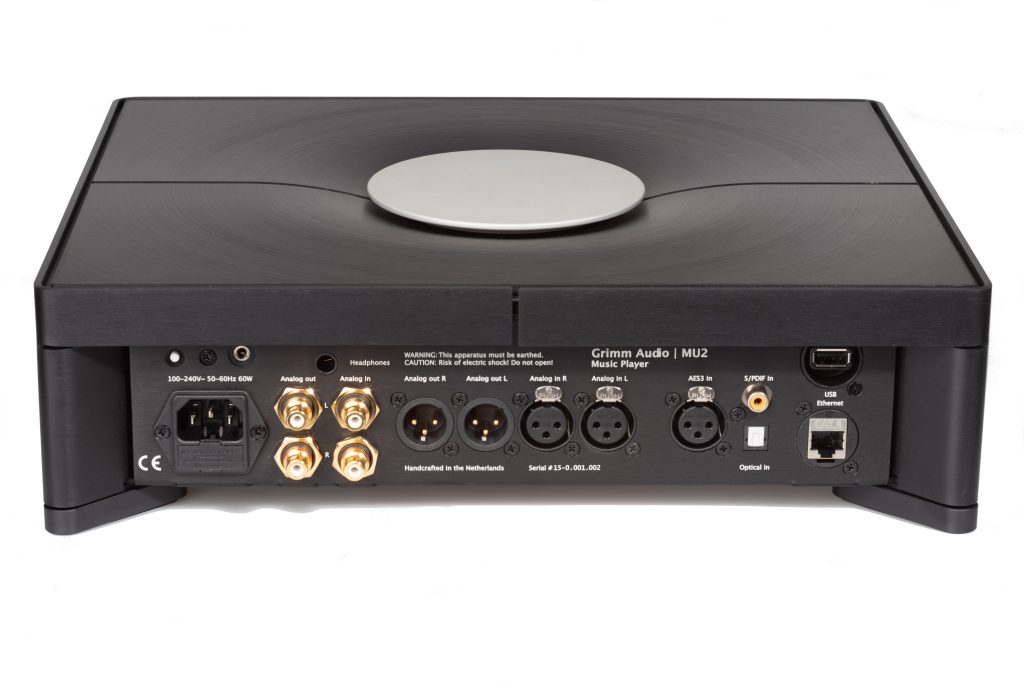
At the time of writing the MU2 starts at £17,250 in our shop. The Tambaqui is £9,999 and the ZEN NG starts at £10,300, so that pair comes to just over £20,000 before you add storage or an output board. If you’re after a decent high-end preamp as part of this upgrade, the Grimm’s value is mega. I go into it in depth in my Grimm MU2 review.
Verdict
Buy it. The ZEN NG is flawless to use, the casework is unbelievable, and with the PhoenixUSB output it’s detailed, unforced and lovely to listen to. If you haven’t got the space or the budget, have an MU2.
This is the note I wrote under the video at the time:
Both are incredible Roon streamers. The Innuos is a micro detail beast, the Grimm MU2 creates solid, dense, tangible instruments in the soundstage. It’s hard to choose a favourite, even now I still love both.
Frequently asked questions
What is the Innuos ZEN NG?
The Innuos ZEN NG is a high-end streamer and server. It runs on Innuos’s own software, the Sense app. It supports Roon, and it handles UPnP if you want to use other software or streamers that need it.
Does the Innuos ZEN NG need a separate DAC?
It’s DAC-less, so it needs a DAC after it. There’s a USB output for that as standard, plus one slot for an optional output board: coaxial digital (Innuos’s SPDIF board, which also gives you optical and AES), I2S, or the upgraded PhoenixUSB, which is reclocked and has much less jitter on it.
How much does the Innuos ZEN NG cost?
Internal storage comes in 2, 4, 8 or 16 terabytes, or none. At the time of writing the ZEN NG starts at £10,300 in our shop with no storage, rising to £15,000 with 16TB. The output boards are extra.
How does the Innuos ZEN NG compare with the Grimm MU2?
The Grimm MU2 I compare it with is a streamer and a DAC in one box, so that comparison is based on the fact that the ZEN NG is with the Tambaqui. From my listening notes: next to the MU2, the Innuos has more of a euphoric quality to its highs. There’s an air and grace about it.
What is Dan Crick’s verdict on the Innuos ZEN NG?
Buy it. The ZEN NG is flawless to use, the casework is unbelievable, and with the PhoenixUSB output it’s detailed, unforced and lovely to listen to. If you haven’t got the space or the budget, have an MU2.