HHT perspective · 18 September 2026
Trinnov WaveForming now works with two front subwoofers, opening a new route to controlled bass without a rear subwoofer array. Hidden Home Technology endorses this development as a worthwhile option for cinemas designed around a small listening area. The important question is not simply whether two subs are enough: it is how well the system serves the seats you actually use.
Choosing between processing platforms? Our StormAudio versus Trinnov guide brings Dan’s experience of manual calibration, active speakers and technical support into the comparison, alongside Dirac ART, Optimizer and WaveForming. The starting point is your room and the complete system.
What has changed with two-subwoofer WaveForming?
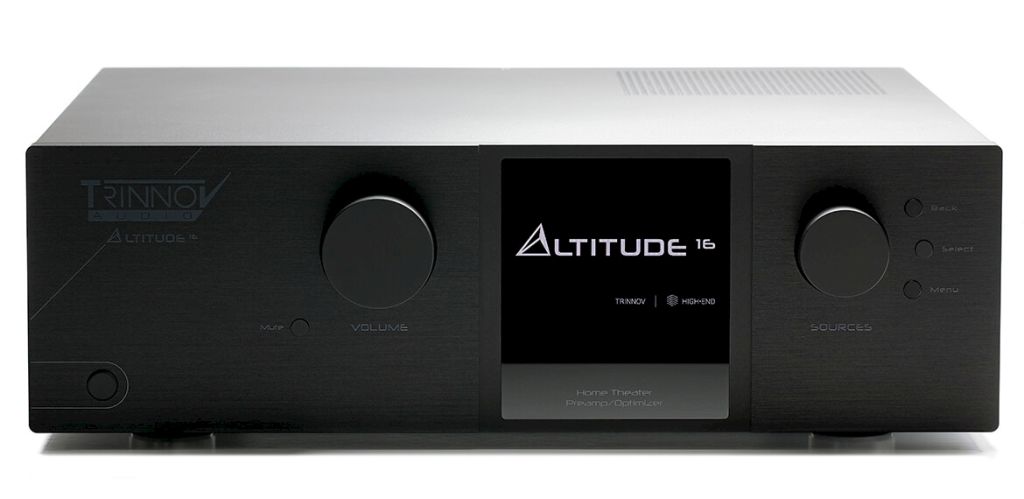
Trinnov’s announcement extends WaveForming to a front-only pair, with both subwoofers acting as emitters and active absorbers. The software update is available for the Altitude16, Altitude32 and AltitudeCI processors.
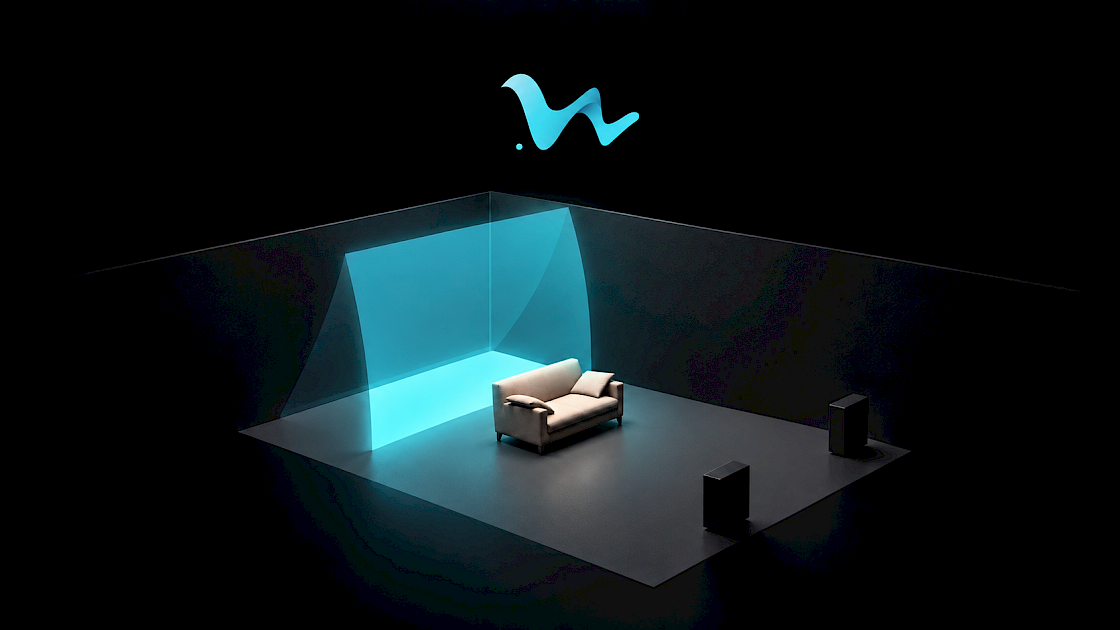
This is not a claim that any two subwoofers, placed anywhere, will deliver the same result. The system relies on compatible Trinnov processing, suitable positioning and calibration. It actively addresses how low-frequency energy behaves in the room, rather than treating the bass response at a microphone position as the whole problem.
Trinnov reports a reduction in decay time of up to 50% below 100 Hz in its measurements. That is a manufacturer result, not a performance promise for every home. Shorter decay means bass energy stops lingering as long after the sound that created it: an important distinction when a room sounds boomy even though the subwoofers are powerful.
The HHT verdict: specify the listening area first
We welcome this update because it gives a properly designed cinema another useful starting point. A room used mainly by one person or a couple has a different brief from a cinema with two full rows of guests. Treating both as a subwoofer-count competition misses the point.
Our recommendation is to consider two-front-subwoofer WaveForming where the priority is one or two seats, the front-wall layout can accommodate Trinnov’s placement requirements and a rear array is impractical. It deserves serious consideration within a complete home cinema design, not as an isolated box upgrade.
For a larger seating area, we would still assess a front-and-rear arrangement. Trinnov is clear that larger arrays offer better control of back-wall reflections and a wider listening zone. The two-subwoofer version’s strongest benefits are concentrated around the optimised positions; performance becomes less consistent farther away.
Three decisions to make before buying
- Choose the priority seats. Mark the normal listening positions on the plan before choosing a processor or promising uniform bass across the room.
- Design the front wall properly. Check subwoofer locations alongside the screen, speakers, fabric treatment and service access. A convenient cabinet opening is not automatically an acoustically suitable position.
- Preserve the upgrade route. If the walls are open, consider cable routes and suitable locations for future rear subwoofers. Trinnov says rear units can be added later, followed by recalibration.
That last point is particularly valuable in a renovation. Starting with two supplied subwoofers need not mean designing a room that can only ever accommodate two. Sensible first-fix planning can protect options without committing the budget to the larger array immediately.
Does this replace acoustic treatment?
No. WaveForming addresses low-frequency behaviour; it does not make loudspeaker placement, sound isolation or the rest of the room’s acoustic design irrelevant. Bass control and room acoustic treatment should be planned together, with clear expectations for what each is intended to achieve.
Our view is that this is the right way to judge new cinema technology: does it help meet a defined brief for the room and its audience? The same principle runs through our guide to CEDIA home cinema design standards. A product feature is useful evidence for a design decision, not proof that the completed room will perform as intended.
Two-subwoofer WaveForming: common questions
Can WaveForming work with just two front subwoofers?
Yes. Trinnov now supports two front subwoofers when they are positioned to its guidelines and used with compatible Altitude processing and calibration. The most consistent benefit is around a compact listening area.
Is it equivalent to a larger front-and-rear array?
No. Trinnov says larger arrays provide better control of back-wall reflections and a wider listening zone. The two-front-subwoofer option is best assessed against the seats and room it needs to serve.
Which Trinnov processors support the update?
Trinnov lists the Altitude16, Altitude32 and AltitudeCI. The processor, installed software and proposed subwoofer arrangement should be checked as part of the system specification.
Plan the bass around your room
If you are planning a cinema in Bath, Bristol or the South West, talk to Hidden Home Technology about your room and seating plan. We can assess whether two-front-subwoofer WaveForming is the right starting point, or whether a wider array better matches the experience you want.
Editorial recommendation by Hidden Home Technology. Product details and performance measurements: Trinnov. About Hidden Home Technology.