Dan’s buying advice · More than a room-correction contest
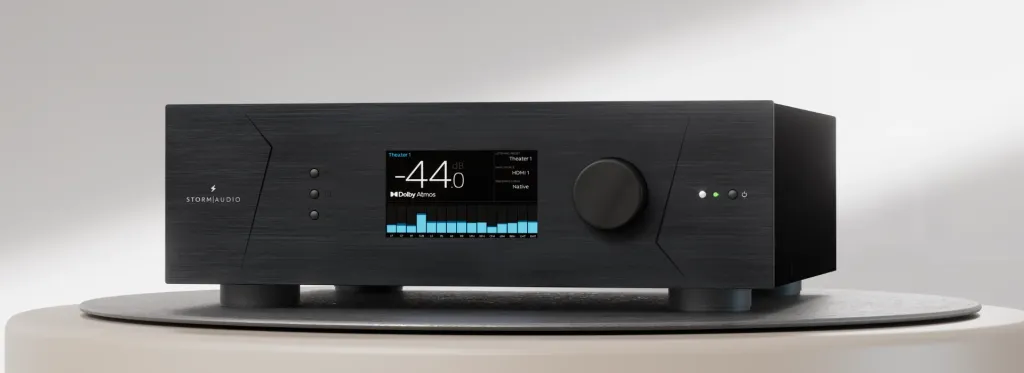
StormAudio or Trinnov? Both belong on the shortlist for a serious home cinema. But comparing Dirac ART with WaveForming is only part of the buying decision. Manual setup, the audio signal path, loudspeaker integration and the support behind the system deserve just as much attention.
Dan has clear reasons for liking StormAudio from his installation work: strong technical backup, flexible manual calibration and the ability to configure the system without applying automatic correction simply because it is available. That is a practical preference, not a claim that Trinnov cannot be manually configured or that one platform always sounds better.
If you are weighing up a purchase, talk to Dan about StormAudio versus Trinnov. A room plan, seating layout and equipment list will tell us more than a list of awards or a claim that one brand always wins.
The short answer: start with the room
Start with loudspeakers whose sound you enjoy, a sensible room layout and the required playback capability. Dan’s preference is to integrate that system carefully rather than choose a speaker he finds too bright and expect broad EQ changes to make it something else. Levels, timing, phase relationships, crossovers and room modes still need proper calibration.
For an existing cinema with suitable speakers distributed around the room, we would examine how effectively Dirac ART could use them for low-frequency support. For a design with space for a planned front-and-rear subwoofer arrangement, Trinnov WaveForming deserves serious consideration from the outset.
Those are starting points, not a rule that StormAudio is for existing rooms and Trinnov is for new builds. Both can be relevant to either. In a compact cinema with two front subwoofers, both approaches now warrant a proper assessment: Trinnov’s updated two-subwoofer WaveForming option makes older blanket comparisons out of date.
Why Dan likes StormAudio before switching on Dirac
StormAudio’s manual calibration tools include up to 20 EQ filter cells per channel and Room EQ Wizard filter import. Alongside individual delays, levels and crossover settings, they let an installer target the work that is needed: subwoofer integration, phase and timing alignment, and troublesome low-frequency room behaviour.
Unneeded corrective filters can be left out or bypassed. That does not remove the DSP required for cinema decoding, bass management or active speaker crossovers. Dan’s goal is to preserve what he likes about the chosen speakers while getting the system to work together—not to declare all processing undesirable.
The technical backup matters just as much. Dan rates StormAudio’s support highly from working with the platform. For a client, the value is in having an installer and manufacturer able to work through a complex configuration and support the system over time.
Then consider what ART can add
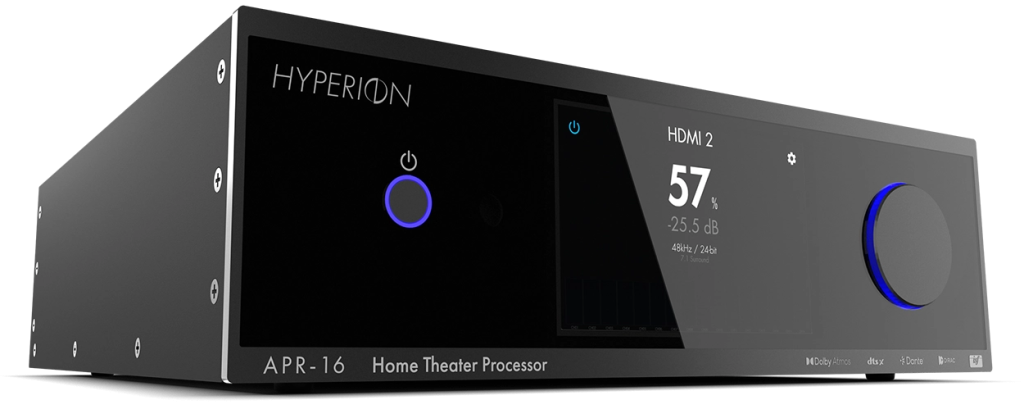
After the basic setup has been measured and assessed, Dirac provides a further route where it delivers a worthwhile improvement. On compatible StormAudio systems, Room Correction, Bass Control and Active Room Treatment perform complementary jobs. ART coordinates suitable speakers and subwoofers to reduce low-frequency resonances and their decay, rather than treating every speaker as a wholly independent source.
That is an attractive design option when the available loudspeakers have useful bass capability and can support the listening area. It does not mean every ceiling or surround speaker should reproduce deep bass. The support ranges must respect the hardware, with enough output left for the soundtrack itself.
Our guide to StormAudio and Dirac ART explains the benefits and limits. StormAudio’s current Core and Evo pages list Room Correction, Bass Control and ART as included; existing units still need their model, software and licence status checked.
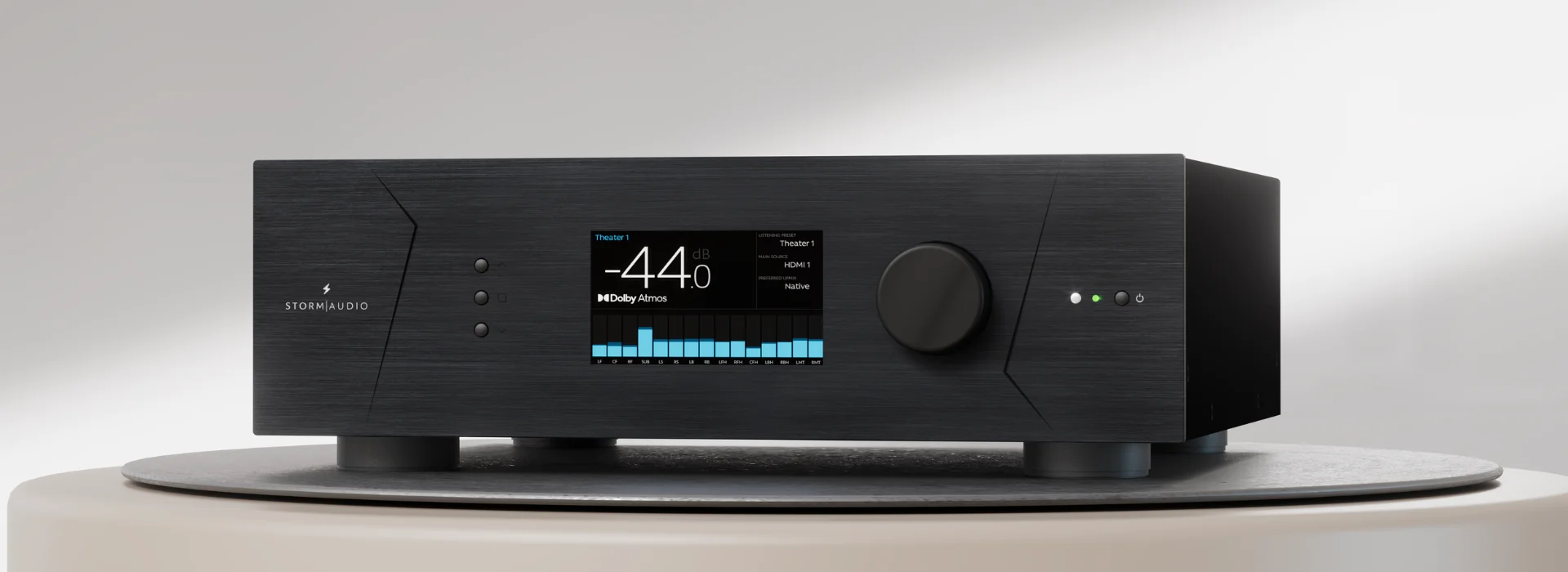
Fully active systems need a closer look at the outputs
Dan has configured suitable Wisdom Audio systems with their active crossover functions inside the StormAudio processor. Separate driver sections receive the correctly filtered signals through separate amplifier channels. StormAudio publishes Wisdom Audio filter guidance and multi-way setup instructions; these are model-specific design requirements, not optional room-correction presets.
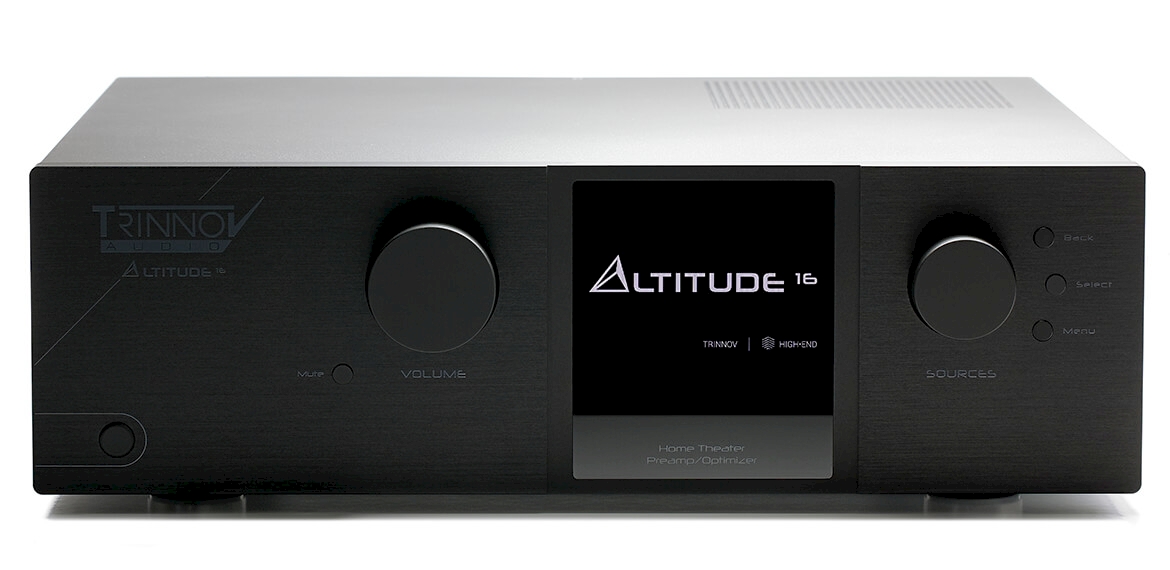
This capability is not exclusive to StormAudio: Trinnov’s Altitude16 specification also lists up to four-way active crossovers. On either platform, count the required output and amplifier channels for the actual loudspeakers, including the extra channels consumed by active operation. A headline cinema-channel count is not the whole specification.
Trinnov: Optimizer, spatial measurement and WaveForming
Trinnov’s Optimizer handles loudspeaker and room calibration. Its 3D measurement microphone also determines speaker distance, azimuth and elevation. Trinnov’s 3D Remapping can use neighbouring speakers to help recreate intended sound positions when real speaker locations are imperfect.
That gives the comparison a dimension beyond bass. It can be relevant where architecture constrains the layout, although it is not a reason to place speakers carelessly. The Altitude16 product information explains these features alongside its bass-management and configuration options.
WaveForming addresses low-frequency sound-field control using subwoofers. A larger, appropriately designed front-and-rear arrangement can offer broader control of reflections and the listening area. The required number and locations should follow the actual room and performance brief.
The hi-fi question goes beyond a DAC badge
Dan also values StormAudio’s attention to the underlying audio electronics, including the analogue output stages where fitted. Conversion, level control and the complete signal path matter alongside the calibration software. StormAudio’s hardware overview explains its engineering approach, but component names alone cannot establish which complete system you will prefer.
Trinnov also takes high-end music systems seriously. Its HIGH END Vienna 2026 demonstration paired the AltitudeCI AoIP platform with a separate dCS 16-channel DAC system and Perlisten speakers. That is an example of an external conversion architecture—not a claim that every Altitude contains dCS DACs. Compare the actual processor, converters and amplification being proposed.
WaveForming no longer always means four or more subs
Trinnov now supports WaveForming with two correctly positioned front subwoofers on compatible Altitude systems. In that configuration, the front pair both generates bass and participates in active control. Trinnov says the strongest benefit is concentrated around a compact listening area, such as one or two seats.
It is not a claim of identical performance to a larger front-and-rear array. Dedicated rear subwoofers still offer greater control of back-wall reflections and a wider listening zone. See our two-subwoofer WaveForming article for the practical implications.
ART and WaveForming are not the same algorithm. ART can draw on suitable main and supporting speakers as well as subwoofers; WaveForming is built around coordinated subwoofer operation. Both go beyond a simple “turn down the bass peak” description, and neither can be judged fairly without considering the physical system it controls.
Three room scenarios worth discussing
An existing cinema with limited scope for alterations
Begin with the current speaker capabilities, subwoofer positions and measurements. ART may provide a useful route to coordinated support without prescribing a large front-and-rear subwoofer array. Trinnov may still be an appropriate option, including its compact WaveForming configuration where the placement guidelines can be met. Neither should be sold as a guaranteed rescue for any layout.
A new cinema with several important seats
Reserve the necessary speaker and subwoofer positions before construction decisions become fixed. We would examine a designed WaveForming array alongside a properly specified StormAudio/ART system, using the same seating brief and output requirements. The goal is the listening area you want to serve, not the largest channel count.
A smaller room with one main listening position
A compact two-subwoofer design may be more relevant than the array shown in a large demonstration theatre. Establish whether the recommended positions are possible, how much bass output is needed and what happens at any secondary seats. Spending more on the processor is not automatically preferable to improving subwoofer capability or room treatment.
Compare the whole installed system
The StormAudio ISP and Trinnov Altitude processors discussed here require suitable separate amplification; they are not powered AV receivers. Build the comparison around a complete specification:
- Outputs and routing: count the speakers and independently controlled subwoofers, then check the actual analogue and digital outputs, expansion and conversion requirements.
- Speaker and amplifier compatibility: StormAudio Evo, for example, uses a fully digital output architecture. The rest of the system must suit the chosen model.
- Sources and picture formats: confirm the fitted HDMI hardware and support required by the proposed sources, display and gaming equipment.
- Complete cost: include amplification, subwoofers, licences where applicable, cabling, acoustics, installation and calibration—not just the processor price.
- Long-term usability: consider everyday control, access for servicing and recalibration after meaningful layout or equipment changes.
A convincing demonstration should make its room, speaker layout, playback level and calibration clear. Otherwise you may prefer one demonstration room without learning which processor is better suited to your own project.
The HHT recommendation: discuss the nuances with Dan
StormAudio is a strong choice when its manual workflow, active-system flexibility and the support Dan values suit the project. ART can extend that system where coordinated low-frequency control is beneficial; it need not be the sole reason for the purchase. Trinnov deserves evaluation when its spatial calibration, remapping, system architecture or a suitable WaveForming design address the priorities. Where both fit, compare the complete specification, listening area and installed budget.
Our award-winning Bath cinema combines StormAudio and Wisdom Audio. Our separate Steinway Lyngdorf cinema in Midford, near Bath won Silver, Best International Installation, at the 2026 URC Unsurpassed Awards. That room uses Steinway Lyngdorf processing and RoomPerfect, not StormAudio. These projects demonstrate our wider system-design experience; the awards are not a head-to-head processor test.
Speak to Dan about StormAudio versus Trinnov, or call 07736 454506. Send the room dimensions, intended seats, existing equipment and approximate project budget. We can discuss the trade-offs that matter for your room as part of our home cinema design and installation advice.
StormAudio versus Trinnov: common questions
Is StormAudio better than Trinnov?
There is no universal winner. The better choice depends on the exact models, room, seating area, speaker and subwoofer layout, required outputs, calibration and total installed budget. Compare complete designs built around the same brief.
Are Dirac ART and Trinnov WaveForming the same?
No. Both address low-frequency room behaviour, but use different approaches. ART coordinates suitable speakers and subwoofers, while WaveForming uses coordinated subwoofer operation. Trinnov Optimizer also provides wider loudspeaker and room calibration.
Does Trinnov WaveForming need at least four subwoofers?
No. Trinnov now supports two front subwoofers when its placement guidelines and system requirements are met. This option focuses on a compact listening area; larger front-and-rear arrays can provide wider control and better management of rear-wall reflections.
Can both platforms run active loudspeaker crossovers?
Yes. StormAudio documents multi-way active operation, and Trinnov lists up to four-way active crossovers for the Altitude16. The exact speaker filters, available processor outputs and separate amplifier channels must match the proposed system.
Design perspective: Dan Crick, Hidden Home Technology, drawing on his installation experience. Technical references: Dirac ART FAQ; StormAudio Core and Evo; documentation and project pages linked above; and Trinnov’s two-subwoofer WaveForming announcement. Checked 18 September 2026. This is HHT design and buying advice, not a controlled head-to-head listening test.