Integrated Amplifiers
An integrated amplifier combines the preamplifier and the power amplifier in one chassis. For most people in most rooms it is the right answer — not a compromise on the way to separates, but the sensible engineering choice. One box means one power supply designed as a whole, one set of internal connections instead of two external ones, less cable, less shelf, and less to go wrong. A great many systems that would have been better as a good integrated have been sold as mediocre separates.
Our range runs from around £600 to £24,500. Here is how we would help you choose.
Start with the speakers, not the amplifier
The amplifier’s job is to control the loudspeaker, and different loudspeakers make very different demands. A speaker with a benign impedance curve will run happily on a modest amplifier; one that dips low and swings hard needs current, not headline wattage. This is why we will always ask what you are driving before recommending anything, and why the specification sheet is a poor guide on its own.
The second question is the room. A large room asks for more from the amplifier at the same perceived volume — not because you play it louder, but because the speakers have more air to move.
What each tier buys you
Around £600 to £1,500. Streaming integrateds. One box that connects to the network, drives a real pair of speakers and takes a television input. For a kitchen, a study, a second room or a first system, this is where the value in the whole catalogue sits.
£1,500 to £6,000. Serious two-channel amplification, and increasingly with digital room correction built in — which in an untreated domestic room can do more good than any other single upgrade at this price. This is the band we recommend most often.
£6,000 to £13,000. Reference integrateds: bigger power supplies, better volume control, and the ability to hold a difficult speaker under control at real listening levels. The step from the tier below is audible and it is mostly about composure rather than loudness.
Above £13,000. Statement designs, built without a cost target. These outperform most separates at similar total cost, and they need speakers and a room to match.
Valve, solid state, or class D?
Solid state — the default. Control, consistency, no consumables.
Valve and hybrid — a genuinely different presentation through the midrange, and a real preference for many listeners. The trade-offs are heat, weight, and tubes that need replacing eventually. Worth choosing deliberately, not by accident.
Modern class D — small, cool, efficient and, in the current generation, very good indeed. Particularly strong where the amplifier has to live inside a cabinet.
Does it need a DAC and streaming built in?
If you have no digital source and no plans for one, an analogue-only integrated puts every pound into amplification. If streaming is how you actually listen — which for most households it now is — a built-in DAC and network stage removes two boxes and two cables. The one caution is upgrade path: a separate streamer can be replaced in five years without changing the amplifier.
What we carry
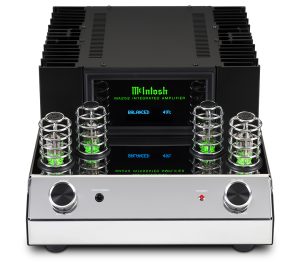
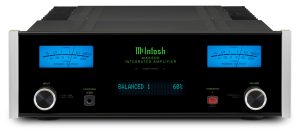
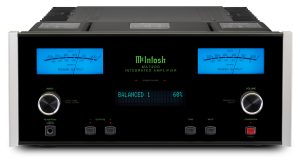
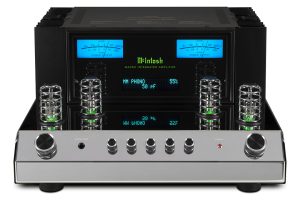
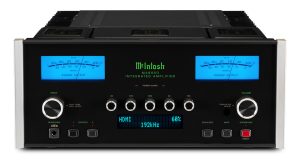
McIntosh — the largest part of our integrated range, from the MA5300 around £7,990 through the MA7200 and MA9500 to the hybrid MA12000 around £20,790 and the valve MA2375. Unmistakable, built to last decades, and serviceable.
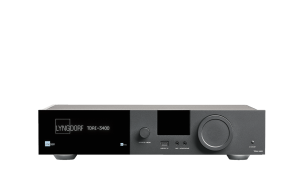
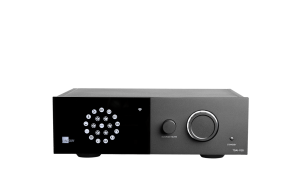
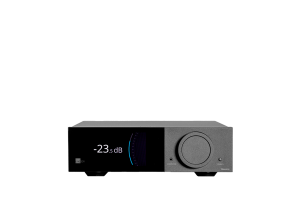
Lyngdorf — from the TDAI-1120 around £1,995 to the TDAI-3400. RoomPerfect room correction is the reason we specify these so often: in a room that cannot be treated, it is transformative.
Gryphon — the Diablo 120 around £13,250 and Diablo 333 around £24,500. Very few loudspeakers exist that these cannot drive convincingly. Read our Diablo 333 review.
Mola Mola — the Kula around £10,999. Dutch, modular, and remarkably quiet.
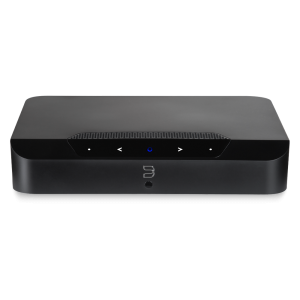
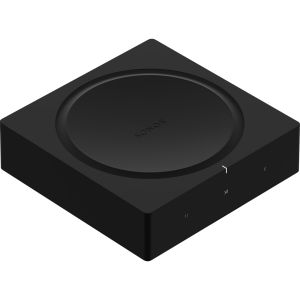
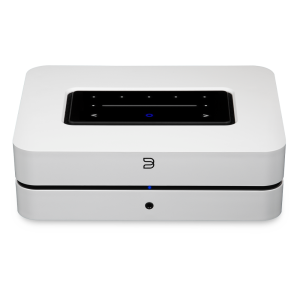
Bluesound and Sonos — the POWERNODE around £899, POWERNODE EDGE around £649 and Sonos Amp around £699, for rooms that need to be part of a whole-house system.
For more of our thinking, read our top five integrated amplifiers and Dan’s Friday Five on integrated amplifiers.
Next steps
Tell us your speakers, your room size and your sources, and we will shortlist two or three. Then come and hear them — get in touch to arrange a private audition at our Bath showroom.
All prices shown include VAT. Hidden Home Technology is a family-run, CEDIA Professional Member business based in Bath, serving Bath, Bristol, the Cotswolds, the wider South West, South Wales, London and the Home Counties.
Showing 1–18 of 24 resultsSorted by price: low to high
-

Lyngdorf USB Input (TDAI-2170 only, included with TDAI-3400)
Integrated Amplifiers
£600.00 -

Bluesound POWERNODE EDGE
Integrated Amplifiers
£649.00 -
Sonos Amp
Integrated Amplifiers
£699.00 -
Bluesound POWERNODE
Integrated Amplifiers
£899.00 -
Lyngdorf TDAI-1120
Integrated Amplifiers
£1,995.00 -

Lyngdorf TDAI-2210 – Basic
Integrated Amplifiers
£3,499.00 -
Lyngdorf TDAI-2210 ADC – High-end analog Input with Phono Input
Integrated Amplifiers
£3,999.00 -
Lyngdorf TDAI-2210 HDMI – 2.1 Input (8K & HDR)
Integrated Amplifiers
£4,399.00 -
Lyngdorf TDAI-3400 – Basic
Integrated Amplifiers
£4,995.00 -
Lyngdorf TDAI-3400 – High End Analog Input with Phono Input
Integrated Amplifiers
£5,595.00 -

McIntosh MA252
Integrated Amplifiers
£5,890.00 -
Lyngdorf TDAI-3400 – HDMI 2.1 Input (8K & HDR)
Integrated Amplifiers
£5,895.00 -
Lyngdorf TDAI-3400 – HE Analog Phono & HDMI 2.1 Input (8K & HDR)
Integrated Amplifiers
£6,295.00 -

McIntosh MA5300 2-Channel Integrated Amplifier
Integrated Amplifiers
£7,990.00 -

McIntosh MA7200 2-Channel Integrated Amplifier
Integrated Amplifiers
£9,190.00 -

McIntosh MA352
Integrated Amplifiers
£9,990.00 -

Mola Mola Kula Integrated Amplifier
Integrated Amplifiers
£10,999.00 -

McIntosh MA8950
Integrated Amplifiers
£12,490.00